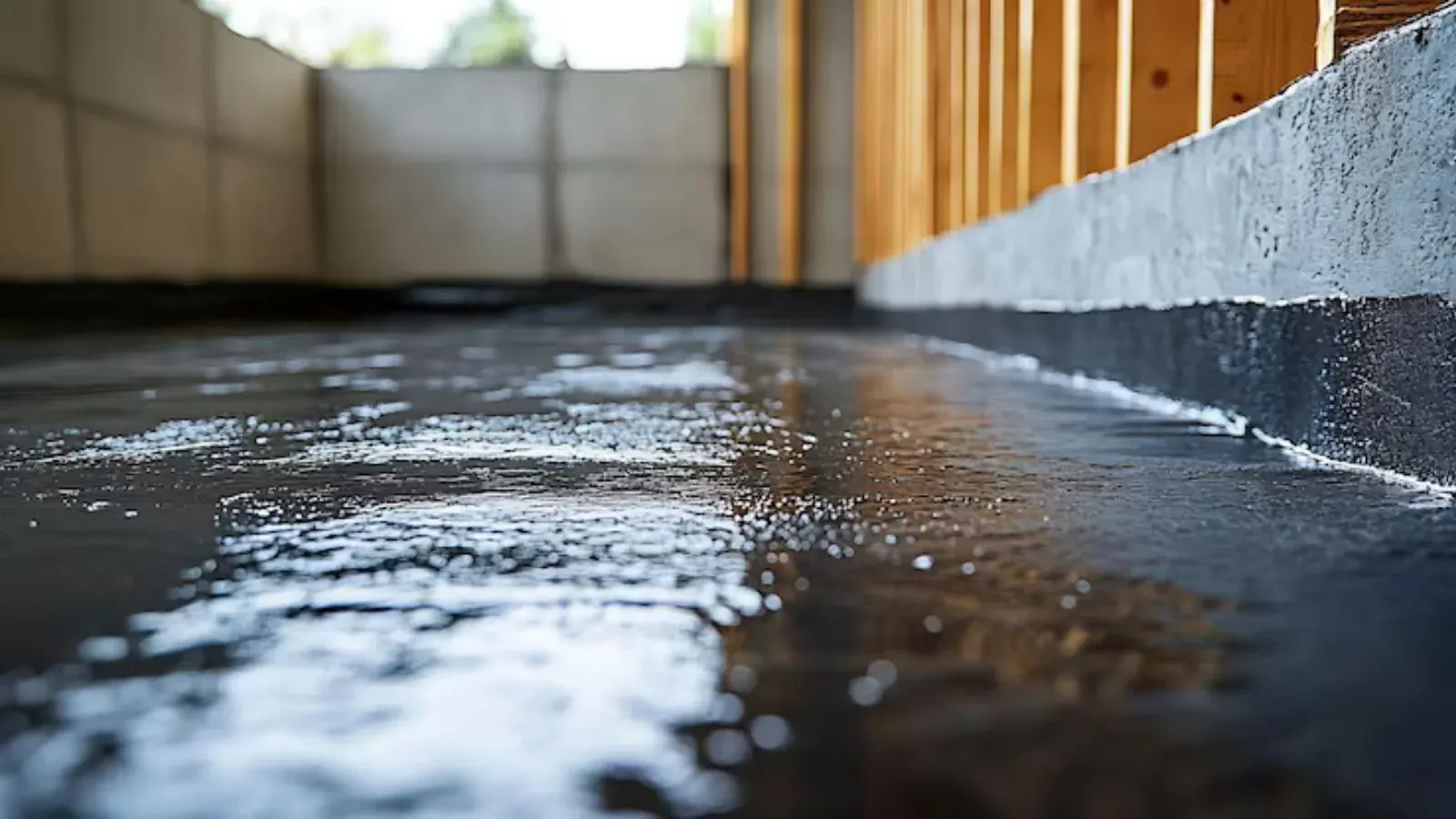
Four ways water gets in, and how to tell them apart
Spend ten minutes looking before anyone sells you a system.
- Condensation.. Moisture on cold pipes, ductwork or the inside of concrete walls in humid weather. Tape a square of foil to the wall for a day. If the water forms on the room side, it is condensation, not a leak.
- Seepage through walls or the floor joint.. Damp, stained or white powdery patches that grow after rain. Water at the joint where the wall meets the slab points to groundwater pressure.
- Pump or drain failure.. Water rising from a pit or floor drain, with a pump that has stopped or cannot keep up. This is a repair question before it is a waterproofing question.
- Sewer or drain backup.. Water that smells and comes up through floor drains or a toilet. That is a drain-line problem, and no wall coating will stop it.
Write down when it happens. Water that shows up only after heavy rain points to the ground and gutters. Water that shows up on a dry day points to a leaking pipe or a high water table, and a plumber should look at it.
Fix the outside before you spend inside
The cheapest waterproofing is moving water away from the foundation. Downspouts should discharge several feet from the wall, and the soil around the house should slope away, not toward it. Gutters packed with leaves send roof water straight down the foundation.
These steps will not cure a high water table, but they cut the load on any pump or drain system you add later. Do them first. If a contractor proposes a large interior system without asking about your gutters, grading or downspouts, ask why.
Interior drain, exterior membrane, or just a pump
| Approach | What it does | Good fit | Main limit |
|---|---|---|---|
| Gutter, downspout and grading fixes | Keeps roof and surface water off the wall | Seepage that follows rain | Does not help groundwater coming up through the floor |
| Sealing cracks | Closes a specific active leak | A single cracked spot | Cracks can reopen as the foundation moves |
| Interior drain tile and sump pit | Collects water at the footing and pumps it out | Seepage at the wall and floor joint | Needs a working pump and power, and the floor is opened up |
| Exterior excavation and membrane | Stops water before it reaches the wall | Wall leaks with accessible soil | Digging cost, landscaping loss, and utility locates |
| Sump pump repair or replacement | Moves water out of an existing pit | A pit that exists but fails | Does not fix where the water enters |
Interior systems are the most common choice because they work from inside and avoid digging around the house. Exterior work can be the right answer on a wall that leaks in one place, but it requires a call to 811 before any digging, and utilities can restrict where you dig. Our basement waterproofing page explains how we approach the choice, and a pit with a weak pump is a job for sump pump repair.
Crawl spaces are a different animal
We do not have a sourced figure for how many North Chicago homes have basements, slabs or crawl spaces, so we will not guess. What we can say is how a crawl space behaves. Bare earth floors release moisture upward all year, and a vented crawl space brings in humid summer air that condenses on cool surfaces.
Signs of trouble are a musty smell upstairs, sagging insulation, visible mold on joists, and standing water after storms. The usual fixes are a ground vapor barrier, controlled drainage with a small pump, and sealing the walls against moist air. Before any of that, check that plumbing in the crawl space is not leaking, because a weeping pipe fools many people into buying drainage they do not need.
Questions to ask before you sign anything
Where is the water entering?
A contractor who cannot point to the entry spot is guessing. Ask to be shown.
What happens when the power goes out?
A drain system that depends on a pump needs backup power. Ask what is included.
Where does the water discharge?
It must go somewhere that is allowed and well away from the house. Ask who checked.
Who handles permits and locates?
Exterior digging needs an 811 request. Local work may need a permit. Ask who files it.
We will look at the wall, the floor, the pit and the discharge, and give you a clear price before work starts.
Call (847) 281-8626Drainage trouble that shapes North Chicago and nearby basements
In North Chicago, the city's housing is mixed, with a median build year around 1973 and 18.7 percent of homes dating to 1939 or earlier. Older foundations tend to have more cracks and older drain tile. If you rent, tell the owner when you see water, and photograph it with a date.
In Waukegan, the county plan documents the Waukegan River flash flood of September 2019 near Helmholz Avenue and 106 flood problem areas after the July 2017 storm. Permits there are required for private sewer repairs and cleanouts, and inspection is required before the work is covered, so ask your plumber about it.
In Gurnee, the village says a gravity sewer backup or a sump pump failure will likely lead to basement flooding, and it encourages residents to install backup systems.
Water, flooding and sewers: what the records show
North Chicago's documented flood history and the drainage project
The Lake County watershed plan ties North Chicago to the July 11 and 12, 2017 storm by name. A post-event survey found 10 flood problem areas and 23 properties affected, including three sewer backups.
The same plan reports that the Strawberry Condominiums had more than 50 residential units with first-floor flood damage in each of two incidents between 2013 and 2019. It also says the Skokie River and Route 41 corridor has a history of damage and road closures tied to undersized culverts.
Lake County's FEMA projects page lists a North Chicago Storm Sewer Project under a FY2022 hazard mitigation grant, worth several million dollars in total, to replace undersized storm sewers and improve the Skokie River culvert and channel.
FEMA's public notice says the aim is to reduce flood risk along Skokie Highway, at the Strawberry Condominiums and at Navy Housing. The North Shore Water Reclamation District states that sanitary and storm sewers in its area are separate systems with no combined sewers.
Waterproofing questions, answered plainly
Not always. Damp walls with no pooling can be condensation or minor seepage, and a dehumidifier plus better gutters may be enough. A leak shows moving or standing water, stains that grow after rain, or white mineral deposits.
If you are unsure, do the foil test above and note when the dampness appears.
Yes. We are open 24/7, and a flooded basement is a call we take any hour. Same-day appointments are available when schedules allow.
On the phone we will tell you what to do while you wait, such as staying away from the electrical panel and moving items off the floor.
Possibly. The FEMA-funded storm sewer project targets undersized storm sewers and the Skokie River culvert along Skokie Highway, the Strawberry Condominiums and Navy Housing. It does not repair a cracked foundation wall or a failed sump pump at your address.
Treat the project as helpful for street flooding, and treat your basement as your own job.
It depends on the length of wall, the floor opening, and whether a pit needs to be added. A short run can be done in a day or two, while a whole-basement system takes longer. We give a schedule after we see the space.
Plan to clear the walls and floor edge ahead of time.
No. A drain tile system handles groundwater. A sewer backup comes from the main line or a blocked drain and needs a different fix, such as a cleaning, a camera check, or a backwater valve.
Our sump pump repair team can still check the pit and discharge when we visit.
Find the entry point, then fix it
Call us to look at the wall, the floor and the pit. We will explain what we see and what it would take to fix it.
Call (847) 281-8626