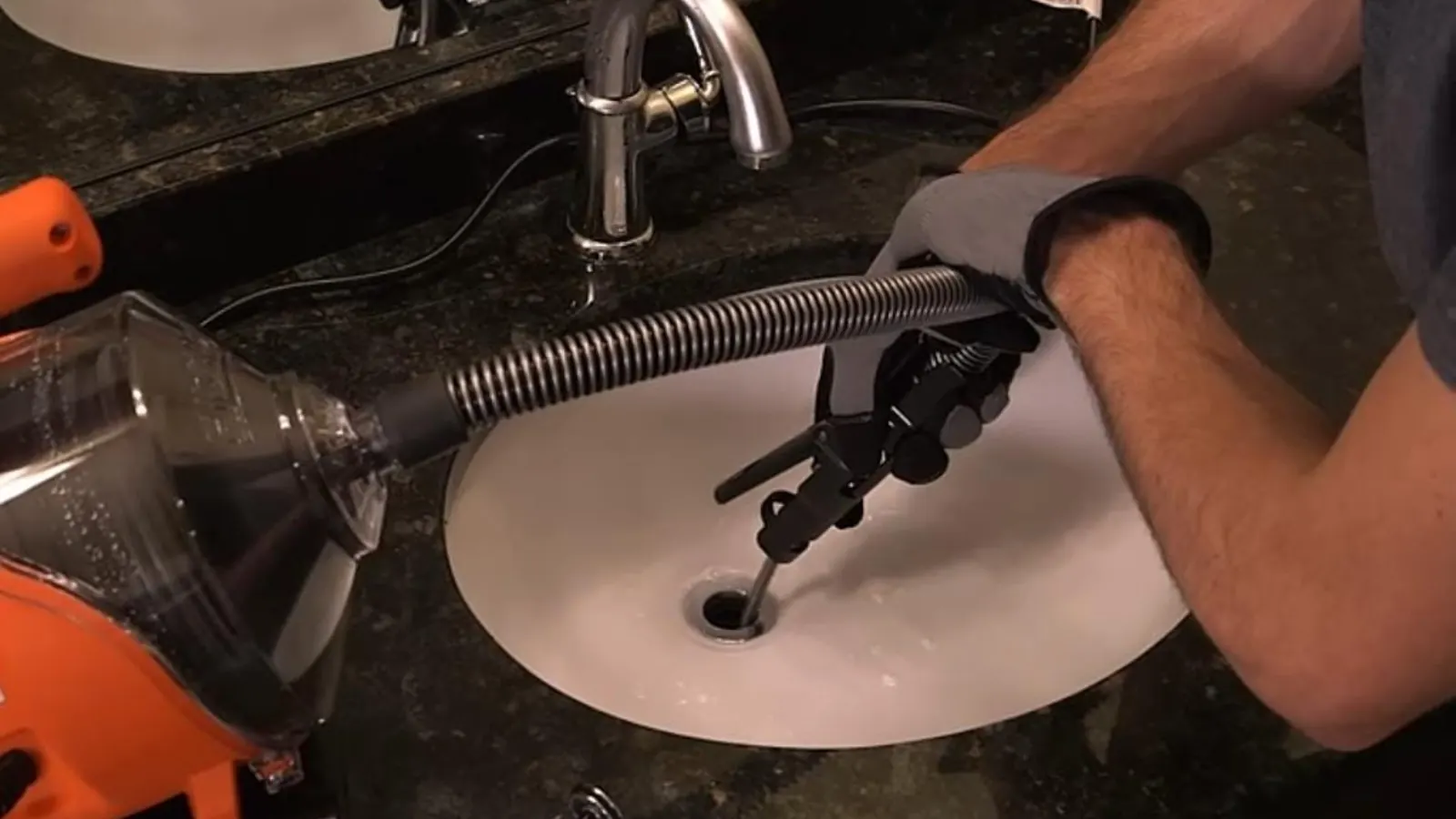
Which drain is clogged tells us where to look
One fixture and a whole house point to very different spots.
A single sink or tub that backs up usually has a clog in its own branch line, close to the fixture. If the toilet gurgles when you drain the washing machine, or the basement floor drain bubbles when someone showers upstairs, the blockage is probably farther down, in the main drain.
That one detail changes the tool we bring, the time the job takes, and the price. Tell us which fixtures are slow, which are stopped, and what sounds you hear. It is the fastest way to get the right equipment on the truck.
Kitchen sink clogs and what builds up in them
Kitchen sinks clog most often from grease that cooled and hardened inside the trap arm and the horizontal line behind the wall. Coffee grounds, rice, and fibrous peels add to it. Pouring hot water rarely helps, because the grease just moves down and cools again.
We use a drain cable sized to the pipe, run it past the trap arm, and pull the debris out instead of pushing it ahead. If the sink has a garbage disposal, we check that the disposal outlet is clear first. When the disposal itself is the problem, see our garbage disposal repair page.
Keep these out of the kitchen drain
- Cooking oil, bacon grease, and fat trimmings
- Coffee grounds and eggshells
- Rice, pasta, and potato peels
- Wipes labeled flushable, which are not drain safe
Tubs, showers, and bathroom sinks
Hair and soap scum form a mat just below the drain opening, and it can be pulled out when it is reachable. When the clog is deeper, we cable the line through the overflow or a cleanout. Showers that stop draining in the middle of a rinse often mean the clog is already partly open and one more load of hair closed it.
If a tub clears and then slows again within weeks, we look farther down the line for a belly in the pipe or a second blockage. A fixture that keeps returning to the same problem is not solved by repeating the same fix.
What the older housing stock does to drains
About 32.3% of North Chicago housing units were built before 1960, and 18.7% before 1940. Drain lines in homes that old may be cast iron, clay, or a mix of both, and they can be rough inside from decades of scale. Rough pipe catches hair, paper, and grease faster than smooth modern pipe does.
The city also has a lot of small multi-unit buildings, with roughly 1,600 units in two-to-four-unit buildings. In those, one shared stack can back up into the lowest unit. If you manage or rent in one, tell us the unit number and the floor, so we can check the stack and not just the fixture.
How a drain cleaning visit goes
Find the problem
We test the fixture, check nearby drains, and decide whether this is a branch clog or a main-line issue.
Clear it
We run a cable or drain machine through the line and watch the water to confirm it flows freely.
Check the result
We run water for several minutes, test fixtures on the same line, and look for slow spots.
Recommend the next step
If the line is rough, cracked, or full of roots, we show you why a camera or hydro jetting would do more than another snake.
Drain cleaning methods side by side
| Method | Best for | Limit |
|---|---|---|
| Hand auger | Sink, tub, and toilet clogs close to the fixture | Does not reach far into the line |
| Drain cable machine | Branch lines and floor drains with grease or hair | Opens a hole through a clog but does not scrub the wall |
| Camera inspection | Repeat clogs and suspected damage | Shows the problem but does not clear it |
| Hydro jetting | Heavy grease, scale, and some roots | Not right for every pipe, we check first |
Gurgles, slow drains, and the signs of a drain line leak
Not every wet spot near a drain is a clog. A damp floor beside a stack, a stain on a ceiling under a bathroom, or a musty smell with no visible source can mean a drain line is leaking. Clearing the clog will not stop that.
We look at joints, cleanouts, and the area under the fixture before we assume the whole problem is a blockage. If we suspect a leak in a wall or under a slab, our leak detection work can pinpoint it with equipment before anyone opens a wall.
What changes the price of drain cleaning
What changes the price
A one-fixture clog and a main-line blockage are different jobs. These are the factors that move the number.
Want the price before anyone arrives?
Call (847) 281-8626Drain cleaning questions we hear in North Chicago
Yes. A backed-up toilet or a floor drain overflowing at midnight gets dispatched like any other emergency. We work out of 3100 Skokie Highway and answer 24/7. Tell us which drains are affected and whether water is coming up, and we will tell you what to do until we arrive.
We advise against it. Chemical cleaners can sit in a stopped pipe and then splash on whoever opens it, and they can damage older pipes. If you already used one, tell the technician.
Repeat clogs usually mean something is left behind. It may be grease coating the wall, a belly in the pipe, roots, or a broken joint. A camera look can answer that.
Yes, with the manager or owner's approval when the building requires it. If you are a tenant, notify your landlord first so billing and access are clear.
Yes. Main-line blockages are a separate job from fixture clogs. See our sewer line cleaning page, and read how Gurnee homes are served from our base.
Call us. We will tell you whether it is the same clog, a new one, or a pipe problem, and we explain what we found at the time of the visit.
Drain stopped right now?
Call North Chicago Express Plumbing and tell us which fixtures are backing up. We will start sorting out the cause on the phone.
Call (847) 281-8626