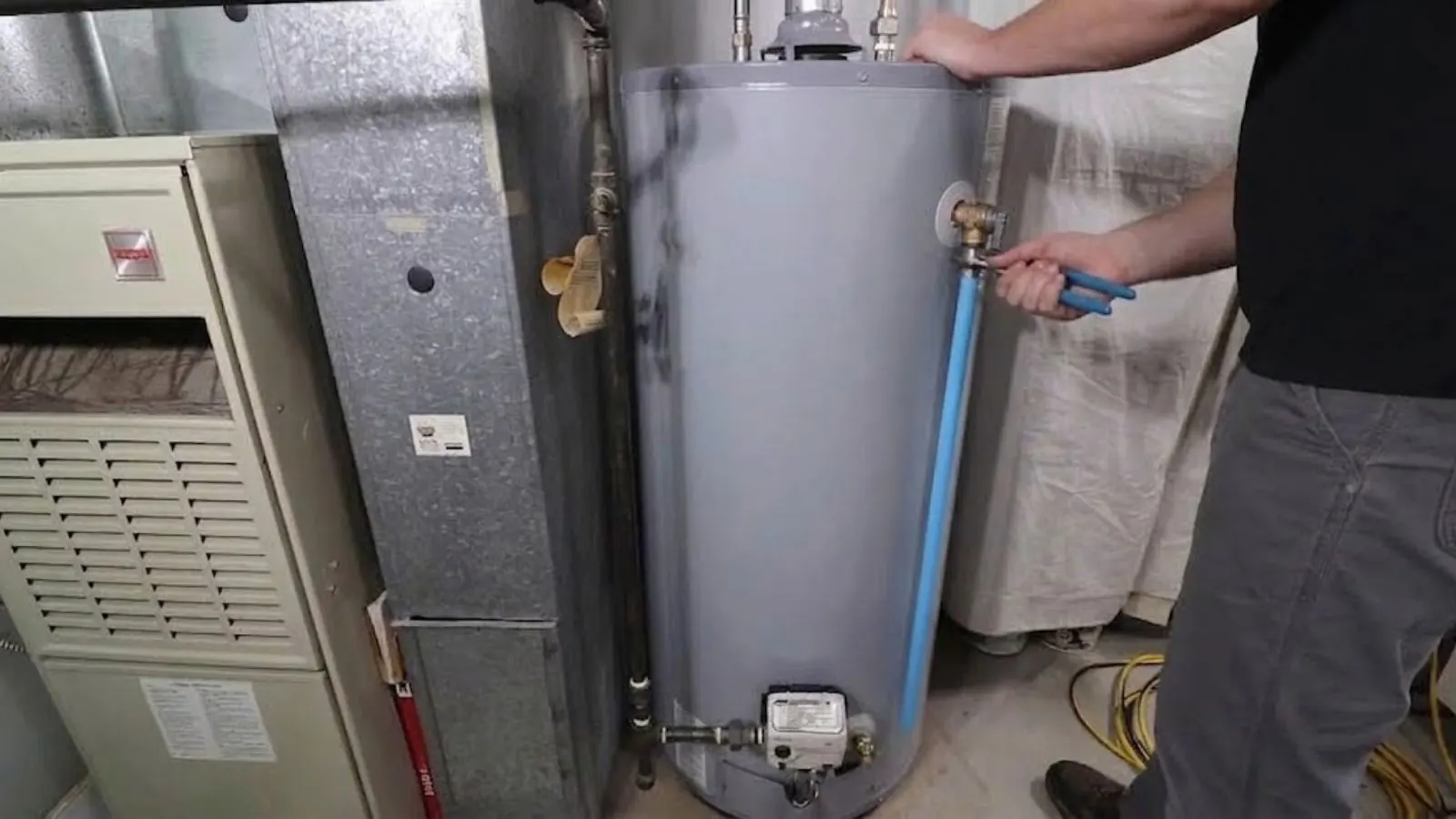
When a water heater failure is an emergency
Some failures can wait until morning. These cannot.
Water pooling around the base of a tank usually means the steel shell has rusted through from the inside. No part can fix that, and the leak tends to grow. A heater that drips from the relief valve pipe is a different story and sometimes only needs a valve or a pressure fix, so tell us exactly where the water shows up.
Treat a flooded basement utility closet, a scorched smell near the burner, or a tank that rumbles and hisses loudly as same-day problems. If a rental unit has no hot water at all and the weather is cold, that is also urgent. After-hours calls get the same dispatch as daytime calls.
Do this while you wait
- Shut the cold-water supply valve at the top of the tank.
- Turn the gas control to pilot, or switch off the breaker for an electric unit.
- Open one hot faucet upstairs so the tank does not hold pressure.
- Move anything that can soak up water away from the floor drain.
- If you smell gas, walk outside first and phone the gas utility or 911.
Replace it or repair it?
We would rather fix a cheap part than sell you a new tank. A bad thermostat, a failed heating element, or a worn thermocouple is a repair, and our water heater repair page covers those. Replacement makes sense when the tank itself leaks, when a repair would cost close to a new unit, or when the heater is old enough that the next part will fail soon.
We check the data plate for the build date, look at the flue and the gas line, and drain a little water from the bottom valve to see how much sediment has settled. You get a plain answer and a price for both options when both are realistic.
What a replacement visit looks like
Look and quote
We confirm the fuel type, tank size, venting, and the space around the old unit, then give you a clear price before work starts.
Drain and disconnect
We shut off fuel and water, drain the tank to a floor drain or hose, and disconnect the old supply lines, flue, and gas connector.
Set the new unit
We set the heater level, fit a new relief valve and discharge pipe, and replace worn connectors instead of reusing them.
Fire it up and test
We check for gas leaks at every joint, confirm the burner or elements run, and test the flue draft before we call it done.
Haul away
We carry out the old tank and show you where the shutoffs are so you know them next time.
Ask the city's building inspection office whether your address needs a plumbing permit for the swap. The city's own page does not spell out a water heater permit process, so we will not guess for you.
Tank, tankless, or the same size again
| Option | Good fit when | Watch for |
|---|---|---|
| Same-size gas or electric tank | You want the fastest swap with the existing venting and gas line | Tanks wear out, so note the install date this time |
| Slightly larger tank | Hot water runs out during back-to-back showers | It needs floor space and a code-compliant relief pipe |
| Tankless unit | You want endless hot water and have room to change venting and gas sizing | It costs more up front and often needs larger gas piping |
| Power-vent or direct-vent tank | The old chimney is shared, damaged, or too small | It needs an outlet and a vent path through the wall |
If tankless interests you, read about tankless water heaters before you decide. A planned install on a calm day is a different job from an emergency swap, and a water heater installation visit lets you pick the model instead of taking whatever is in stock.
What North Chicago housing does to a water heater
The median North Chicago home was built in 1973, but 32.3% of the housing stock dates from before 1960, and about 18.7% from before 1940. Older buildings often have tight utility closets, aging flues, and gas lines that were sized for appliances from another era. We look at all three before we quote, because a new tank that fits the old hole in the wall can still vent badly.
Your water comes from the city's own treatment plant, which draws from Lake Michigan and uses chlorine as its disinfectant. The city's water reports do not publish a hardness number, so we do not assume one. We judge by what comes out of the drain valve, and we tell you what we see in the sediment.
Renters, landlords, and apartment buildings
About two out of three North Chicago households rent, and roughly 28% of housing units sit in buildings with five or more units. That changes who calls and how the job runs. A tenant should report a leak or cold water to the landlord or property manager right away and keep the date and time. A manager can call us directly and approve the work.
In a multi-unit building, tell us whether the heater serves one unit or the whole building. A shared system may involve a boiler or recirculation loop, and our boiler repair work may be the better fit. Photos of the data plate help us bring the right unit on the first trip.
What changes the price of a replacement
What changes the price
Two heaters of the same size can cost very different amounts to install. These are the real drivers, and we walk through each one before we start.
Ready for a firm price on your heater?
Call (847) 281-8626Water heater replacement questions from North Chicago homes
Yes. We answer calls around the clock and dispatch from 3100 Skokie Highway, so a leaking tank at 2 a.m. gets the same response as one at noon. Tell us the fuel type and whether the leak is from the tank or a pipe fitting. We also give you shutoff steps over the phone while the technician is on the way.
A straightforward same-size swap is usually a half-day job. Changing fuel type, moving the unit, or rebuilding the vent takes longer. We tell you the expected time when we quote.
Same-day appointments are available when we have a matching unit and a technician free. If your size or fuel type is less common, we say so right away instead of promising a time. We also cover Lake Bluff, just south of North Chicago, from the same dispatch point.
The city's building inspection office is the place to ask. North Chicago's published page lists adopted codes but does not describe a water heater permit process, so we point you to the office rather than guess.
Sediment buildup, a worn anode rod, high water pressure, or constant thermostat cycling can shorten a tank's life. We check what we can on the old unit so the new one lasts longer.
Almost never. A leak from the bottom of the tank means the shell has failed. Fittings and valves above the tank are often fixable, so we find the source before we recommend replacement.
Need hot water back today?
Call North Chicago Express Plumbing for a clear price and a technician who can pull the old tank and set the new one.
Call (847) 281-8626