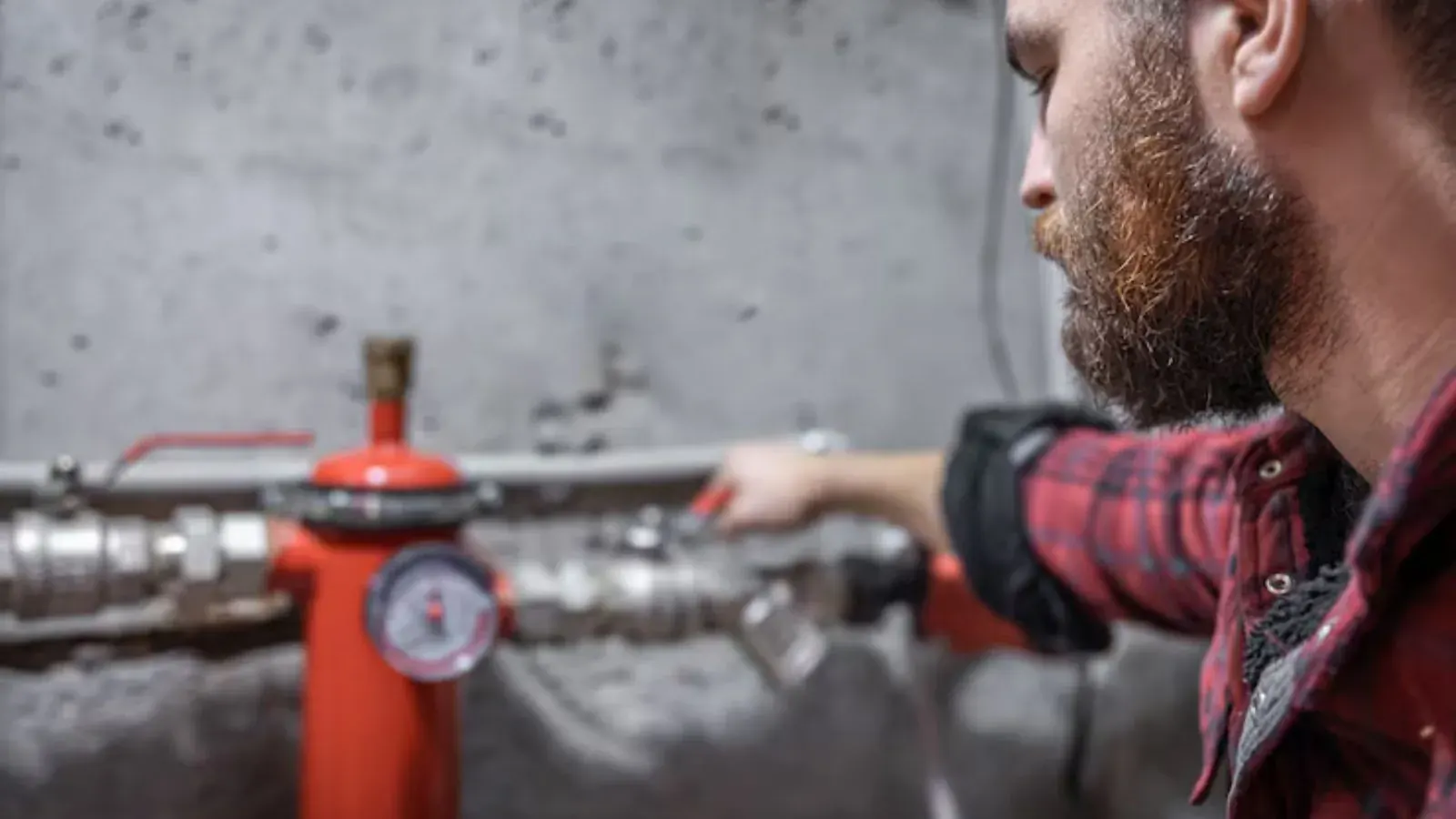
The meter test you can do before we arrive
It takes a few minutes and tells us a lot.
Turn everything off
Close every tap, stop the dishwasher and washing machine, and make sure no toilet is running.
Read the meter
Find the small dial or triangle on the meter face. If it moves, water is flowing somewhere.
Close the main valve
Shut the valve where the line enters the house, then check the meter again.
Read the result
If the meter stops, the leak is inside the house. If it still moves, the leak is between the meter and the house.
This one test sorts most calls into inside or outside, which decides the tools we bring.
Water bill climbing but nothing looks wet
A slow rise in your bill across a few cycles is often a leak that started small. Running toilets, dripping valves under a vanity, and a leaking water heater connection show up this way. Hidden pipe leaks in a wall or under a floor can run for weeks with little visible damage.
Check your own bill against the same season last year, and note whether anything changed in the house. If a property has been sitting empty or just changed tenants, a leak is more likely than a change in habits. Bring the last two bills and we will compare.
| What you notice | Likely area | Where we start |
|---|---|---|
| Meter moves with all taps closed | Inside the house or the line to it | Main valve test, then a pressure test |
| Ceiling stain that grows | Supply, drain, or roof | Moisture map and thermal scan |
| Warm spot on a floor | Hot line under the slab | Acoustic listening on the hot side |
| Soft or green patch in the yard | Buried service line or irrigation | Locate lines, then isolate |
| Bill up but no damage | Toilet, valve, or hidden wall leak | Fixture checks and a meter comparison |
Ceiling, wall, and attic leaks
Stains on a ceiling can come from a supply line, a drain line, a roof leak, or condensation on a cold pipe. A drain leak often leaves a brownish ring and shows up when the fixture above is used. A supply leak keeps going when no fixture is running.
We use moisture meters and thermal imaging to trace the wet area back toward its source, and we often locate it without cutting much drywall. When the water comes from a roof or window, we say so and you will need a roofer instead. We would rather tell you that now than open a wall for nothing.
Under the house, in the crawl space, and under the slab
Warm spots on a floor, a faint hissing sound at night, or damp soil in a crawl space suggest a leak below the living space. We use acoustic listening gear and pressure testing to isolate which line is losing water, then narrow it to a few feet.
For slab leaks, we pinpoint the spot before any concrete is touched. Then you decide between a spot repair, a reroute through the walls, or a larger repiping plan. That decision stays with you, backed by what we found.
Leaks between the meter and the house
North Chicago's lead service line plan counted 5,653 service lines in the city's water system, with 849 identified as lead and 144 galvanized lines flagged for replacement. Older service lines are a common place for a hidden leak, and the line is usually buried and out of sight. Wet ground in the yard, a soft spot in the lawn, or low pressure at every tap can be signs.
Before anyone digs, call 811 so JULIE can mark buried utilities. Ask the city water department whether the problem sits on its side of the line or yours. If the leak is on your side, our water service line repair page explains what comes next. Homes on the Navy's own system are a different case, so start with your housing provider.
Irrigation, pools, and outdoor spigots
Sprinkler zones, hose bibs, and pool lines leak out of sight and can run up a bill during summer months. We can test whether a lawn system or pool line is losing water and mark the area. Water bills that jump only in warm months often point outside.
What leak detection costs and what changes it
What changes the price
Finding a leak is diagnostic work, and the price depends on how hard the leak is to isolate.
Think you have a hidden leak? Ask about a same-day visit.
Call (847) 281-8626If the leak turns out to be a failed pipe, our burst pipe repair crew handles the fix, and you do not need a second company to start over.
Checking for a leak before you buy or rent out a place
Landlords and buyers often ask for a leak check when a unit changes hands. In a city where about two-thirds of households rent, a quiet leak in a vacant apartment can run for weeks. We test supply lines, look at the water heater and fixtures, and write down what we found.
We also cover nearby areas such as Lake Bluff, which borders North Chicago to the south.
Leak detection questions
Yes. When water is actively spreading, call any hour. We take calls 24/7, and we give you valve and cleanup steps on the phone while a technician heads out from our Skokie Highway base.
We combine moisture readings, thermal imaging, listening equipment, and pressure tests. These narrow the leak to a small area so any opening is as small as possible.
Water is flowing somewhere. Do the meter test above. Whether it stops when the main is closed tells us if the leak is in the house or outside it.
Yes. Multi-unit buildings often need us to test unit by unit, so tell us how many units there are and who can give access.
In most cases, yes. We explain the repair options and give a clear price before we start. If the source is a roof or exterior wall, we tell you to call the right trade.
It can. The city water department can tell you where its responsibility ends. Call it with your address and the meter reading.
Water going somewhere it should not?
Call North Chicago Express Plumbing with your meter result and a short description. We will tell you what to do next.
Call (847) 281-8626