Signs the main line is the problem
A single clogged sink is a branch problem. A clogged main affects everything at once, because all drains meet in the same pipe before leaving the house. The lowest fixture in the building, often a basement floor drain or a shower, is the first to show it.
Red flags that point to the main
- Several fixtures slow or gurgling. A toilet bubbles when the washing machine drains, or the tub fills when you flush.
- Water in the basement floor drain. Dirty water or sewage at the lowest drain is the classic sign.
- Sewer smell indoors. A smell that comes and goes with water use can mean the line is partly blocked.
- Backups after rain. If problems cluster after storms, the line may be taking in groundwater or roots may be blocking it.
- Slow drains everywhere after a plunge fails. If plunging a toilet makes another fixture rise, the obstruction is past the branches.
If you can see a cleanout, a capped pipe near the floor with a square or round plug, it gives a plumber direct access to the main. Do not open it yourself when the line is full. Sewage under pressure can spray, and it carries bacteria that you do not want on skin or clothes.
What clogs a sewer line
| Cause | How it builds | Typical clue |
|---|---|---|
| Tree and shrub roots | Fine roots enter joints and cracks, then thicken | Repeat clogs every few months, often after rain |
| Grease and soap | Fat cools in the pipe and traps solids | Slow flow that worsens gradually |
| Wipes and paper products | They do not break down and snag on rough spots | Sudden backups after heavy bathroom use |
| Scale in old cast iron | Rough inner walls catch debris | Repeat clogs in a home built before 1960 |
| Bellied or sagging pipe | A low spot holds water and waste | Clean drains for a month, then another slow one |
| Collapsed or broken pipe | Soil crushes or shifts the line | Cleaning machine stops at the same distance every time |
The last row is the reason we run a camera after a hard clog. A cleaning that clears the water but leaves a cracked pipe is a temporary fix, and the next backup is only a matter of time.
Cabling versus hydro jetting
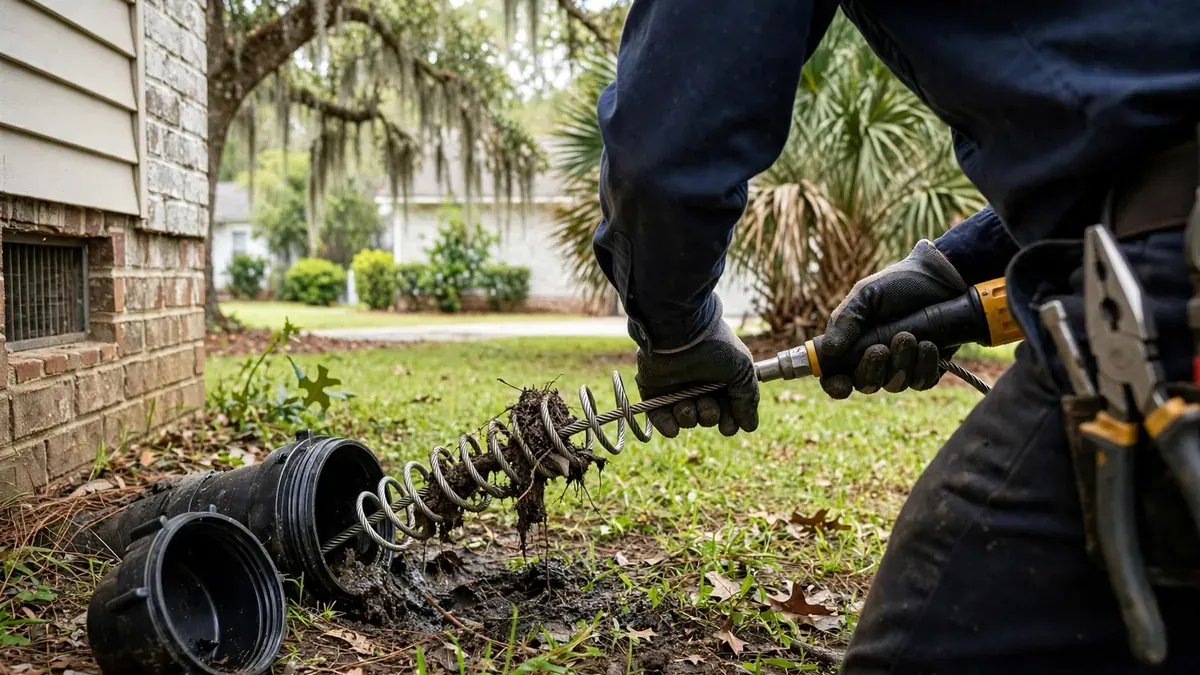
A cable machine pushes a spinning cutter down the line to break through a blockage or chop roots. It opens a path quickly, which suits a fresh blockage or a hair-and-paper plug. The walls of the pipe stay coated, though, so grease and scale can narrow the line again.
Hydro jetting blasts the inside of the pipe with high-pressure water and scours the walls clean. It is better for heavy grease, sludge and the fine root hairs a cable can leave behind. It is not for every pipe: a line that is cracked, offset or badly corroded should be inspected first, because strong water can make a weak spot worse.
How we decide between the two
- A fresh, solid blockage with an otherwise healthy line usually gets a cable first
- Repeat clogs, grease buildup or roots point toward jetting
- An unknown line condition gets a camera look before any high-pressure work
- A line that will not clear, or that shows damage on camera, moves to a repair conversation
What happens during a sewer line cleaning
We find the access point
A cleanout is best. If there is none, we may work through a toilet or a roof vent, and we tell you whether a new cleanout is worth adding.
We clear the blockage
The cable or jetting hose goes in until the water drains and the machine moves freely.
We run a camera
A camera on a flexible cable shows what is left behind and whether the pipe is cracked, offset or root-filled.
We explain the result
You see the footage and hear a plain answer: clean and fine, needs periodic maintenance, or needs a repair.
We give the price before repair work
If the camera shows damage, the repair conversation includes a clear price before anything is dug up.
Our sewer line cleaning visits end with the camera for that reason. A clear line with a clean camera pass is the proof you want in hand, especially if you rent out the property or plan to sell.
What to do while a sewer backup is happening
While you wait for the plumber
Stop running water everywhere: no flushing, no laundry, no dishwasher and no showers. Each gallon you add has nowhere to go but out of the lowest drain.
Keep children, pets and anyone with a weak immune system out of the wet area. Do not walk through sewage in bare feet, and do not touch electronics or outlets near it. If water is near the electrical panel, leave and call 911 or your utility.
After the line is clear, wash hard surfaces with hot water and a household disinfectant, and throw away soaked cardboard, carpet padding and anything porous that cannot be cleaned. Photograph the damage before you move it, and ask your insurer what they cover for sewer backup, since many policies need an add-on.
Sewage in the house does not wait for a convenient time. Call and we will tell you what to do first, then get a technician out with the right machine.
Call (847) 281-8626Older buildings and heavy rental housing in North Chicago
North Chicago's median home dates from 1973, and 32.3% were built before 1960. Houses from that older group may have cast iron or clay lateral lines that rough up inside, crack at joints and let roots in. Those materials are why a camera is part of almost every clog call.
With 67.4% of households renting, many backups happen in buildings where one lateral serves several units. A blockage that looks like a tenant's problem often starts upstream. If you rent, report a backup to your landlord at once and in writing, and say which units are affected.
Waukegan and Libertyville: permits and sewer facts
We clean sewer lines in Waukegan and Libertyville, and both are covered from our 3100 Skokie Highway dispatch point. Both places publish rules on private sewer work that affect what happens if cleaning reveals damage.
Waukegan and Libertyville: private sewer rules
On its sewer page, Waukegan says cleanout installs, private sewer repairs and replacements all need a permit. You apply online first, the city inspects before the trench is closed, and starting without a permit doubles the fee. Waukegan has about 38% of its homes built before 1960, and Lake County's flood plan counted 106 flood problem areas in the city as of July 2017.
Libertyville's Village runs its own wastewater treatment plant and keeps sanitary and storm sewers as separate systems. Its Building Division has an online permit application for private sewer repair. The Village's stormwater plan notes that many storm sewers were built before modern stormwater standards and that flooding also occurs where sewer backups may happen.
Sources: City of Waukegan sewer page and Lake County Lake Michigan watershed plan, Village of Libertyville Building Division and Master Stormwater Plan pages.
Plain cleaning generally does not alter the pipe, but adding a cleanout or repairing a section does. Ask the building department before any digging, and call JULIE at 811 so buried utilities are marked.
Sewer line cleaning questions
Check how many fixtures are affected. If a sink or toilet alone is slow, it is likely a branch. If several fixtures back up together, or if the basement floor drain bubbles when you run water elsewhere, the main is the likely culprit.
No. Cleaners cannot cut through a root mass, they can damage old pipe, and they leave a hazardous liquid that a plumber must work around. For a main line, mechanical cleaning is the safe and effective choice.
No. Cleaning clears waste and roots, but a crack or offset joint will let roots back in and bring the blockage back. That is why we run a camera afterward and tell you what it shows.
Yes. Waukegan's sewer page says private sewer repairs, replacements and new cleanouts all need a permit. You apply online before the work, and the city inspects before the pipe is covered. We can walk you through what to expect.
Yes, we are open 24/7 and sewage in the house is treated as urgent. Cleaning that is not urgent can often be booked for the same day if the schedule has room.
Get the main line clear
If water is backing up or draining slowly everywhere, call now. We will explain the next step and quote you a price before work starts.
Call (847) 281-8626