Safety first: gas, carbon monoxide and hot water
Leave first, call second
Rotten-egg smell, hissing near a gas line, or a carbon monoxide alarm going off: get everyone out, including pets. Do not flip light switches, use the phone inside, or try to find the source. Phone your gas utility or 911 once you are a safe distance away.
Headache, nausea, dizziness or drowsiness in several people at once, especially when the heat is running, can point to carbon monoxide. Move to fresh air and call 911. Do not go back in to check the boiler.
We do not give advice on repairing gas piping, relighting a pilot on an unfamiliar unit, or bypassing a safety control over the phone. Those are jobs for a licensed technician who can test combustion and check venting on site. A boiler that has been tampered with can fail in ways that look fine until the next cold night.
Also treat hot water as a hazard. A boiler holds pressurized water at high temperature. If you see steam, a hissing relief valve or water spraying from the unit, keep clear and shut off the power switch if you can reach it safely.
What you can check without opening anything
These steps are safe for most homeowners and often explain a no-heat call.
Check the thermostat
Confirm it is set to heat, set a few degrees above room temperature, and has working batteries. A dead thermostat is a surprisingly common cause.
Look at the power switch and breaker
Most boilers have a switch that looks like a light switch near the unit. Make sure it is on and the breaker has not tripped.
Read the pressure gauge
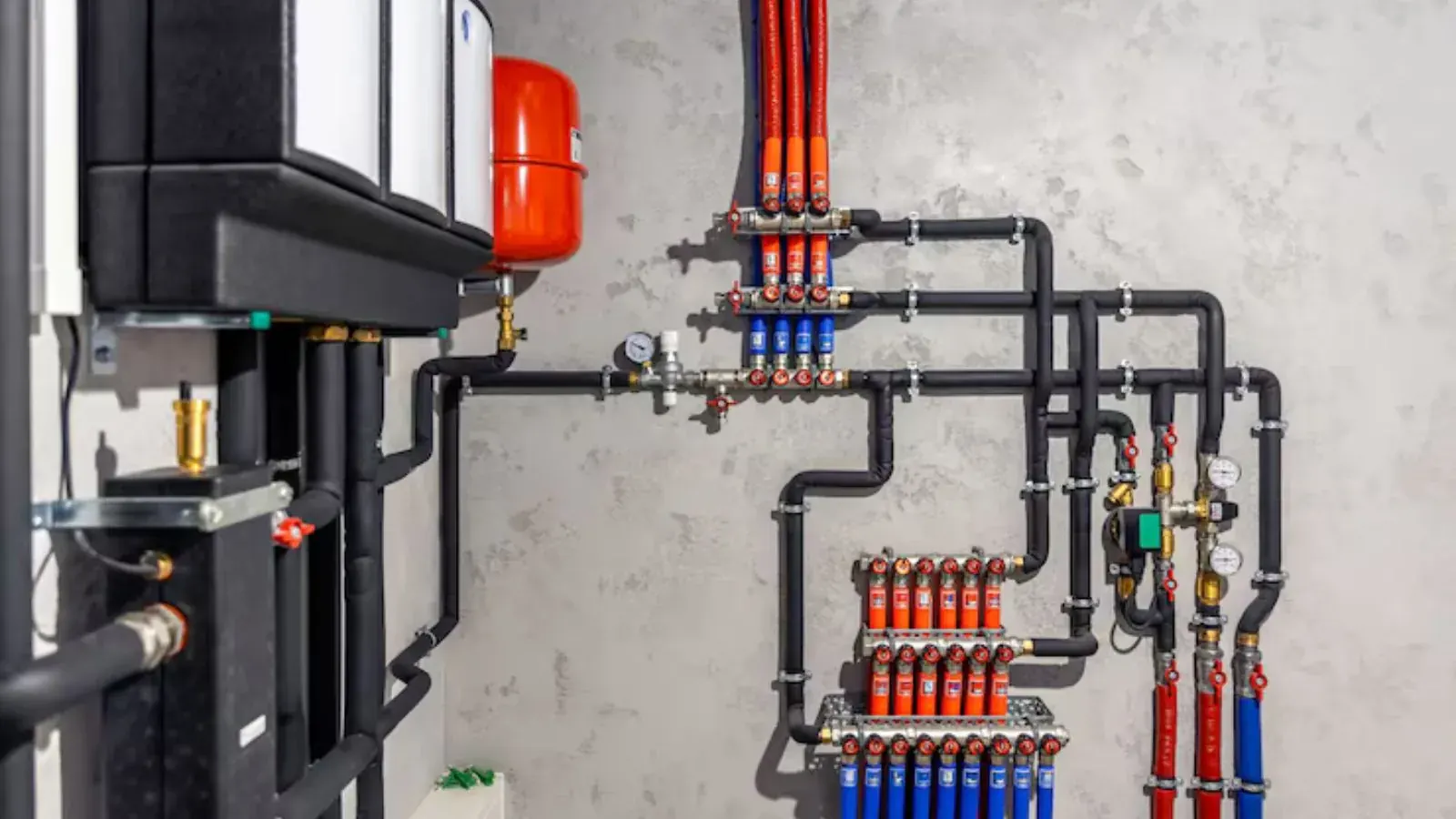
Many home boilers sit between roughly 12 and 15 psi when cold, but check your unit's label. Very low pressure can lock the boiler out, and very high pressure can open the relief valve.
Look for error codes or lights
Note any code on the display and write it down. It helps a technician bring the right part.
Reset once, no more
If the manual allows it, use the reset button one time. A boiler that locks out again right away is telling you something is wrong, and repeated resets can make it worse.
If the gauge reads zero, water is leaking or has been drained, and refilling without knowing why can hide a leak. Photograph the gauge, shut the unit off, and call. We would rather ask a few questions on the phone than send you into a basement with a hose.
Common boiler problems and what they point to
| Symptom | Common cause | Who handles it |
|---|---|---|
| No heat, unit silent | Thermostat, power, tripped limit control or failed circulator | Homeowner checks the basics, technician does the rest |
| Pilot or burner will not stay lit | Flame sensor, ignition part or gas supply issue | Technician only |
| Banging or kettling noise | Mineral buildup or low water flow | Technician |
| Radiators cold on upper floors | Trapped air or poor circulation | Bleeding a radiator is simple, but check the system pressure first |
| Water pooling around the boiler | Leaking valve, fitting or tank | Technician, and shut the unit off |
| Boiler cycles on and off | Oversized system, dirty sensor or low pressure | Technician |
The right-hand column matters. Resetting a lockout or topping up pressure is reasonable. Replacing an ignition part, adjusting gas pressure or opening the combustion chamber is not. The risk is not just a failed repair. It is gas leaking or exhaust gases entering the house.
What a same-day boiler visit covers
A technician starts with the same questions we ask on the phone, then confirms safety before touching controls. That means checking for gas odor, looking at the venting, and verifying the carbon monoxide alarm works. After that, the diagnosis follows the symptom.
What we look at on a typical visit
- Water pressure, expansion tank and relief valve
- Thermostat signal and the circulator pump
- Ignition parts and the flame sensor
- Flue and vent pipe condition
- Visible leaks at valves, fittings and the unit itself
- Whether the problem is a repair or a sign the boiler has reached the end of its life
Parts availability decides whether a repair finishes the same day. Common items like thermostats, sensors and circulator parts are often available, while some boiler-specific parts must be ordered. We tell you that before any work starts, along with a clear price, so you know if the house will be warm tonight or if you are waiting on a delivery.
Our boiler repair work covers diagnosis, parts and testing. If the heat is out and your hot water has gone with it, our water heater repair team can look at both systems during the same visit, since a failed indirect tank can mimic a boiler problem.
Why older homes around here need a closer look
North Chicago has a median build year of 1973, and 32.3% of its homes date from before 1960. Older houses are more likely to have older boilers, older radiators and older venting, and those parts wear in ways newer systems do not. We check the vent connections and the radiator valves early in an older home.
About 67.4% of households rent, and many live in buildings with a shared boiler. If your building has a central boiler, the repair is your landlord's call, but you can help by reporting the problem in writing and noting which units are affected. A cold building in winter is an emergency, and landlords respond faster when they have specifics.
Lake Forest and Libertyville: permits and housing
We take boiler calls in Lake Forest and Libertyville, each reachable from our 3100 Skokie Highway dispatch point. Both have older cores with plenty of aging heating equipment, and both have their own building departments.
Lake Forest and Libertyville: codes and old housing
Lake Forest's building permit page lists plumbing permit and water heater permit applications. It does not describe boiler replacements, so ask the Community Development office whether yours needs a permit before you schedule it.
The city has adopted the Illinois Plumbing Code as modified by its own Chapter 150, along with the 2021 International Fuel Gas Code and 2021 mechanical code. Census data shows about 18% of Lake Forest homes were built in 1939 or earlier, and about 31% before 1960.
Libertyville has adopted the 2014 Illinois Plumbing Code. The Village keeps no plumber registry of its own. Instead it wants the contractor's state registration, the plumber's license and a signed letter of intent on every project. About 28% of its homes were built before 1960, and about 9% in 1939 or earlier. Ask the Building Division whether a boiler job needs a permit.
Sources: City of Lake Forest building permit and codes pages, Village of Libertyville contractor requirements and codes pages, Census ACS 2020 to 2024.
Illinois licenses plumbers through the Department of Public Health. If a contractor cannot show a current license, treat that as a reason to pick someone else for gas and heating work.
Keeping heat on while you wait
Safe steps until the technician arrives
- Keep a working carbon monoxide alarm near the sleeping area and test it
- Close doors to unused rooms and gather everyone in one warmer room
- Do not use an oven, grill or stove burner to heat the house, because they release carbon monoxide
- Run a small electric space heater only if it is in good shape and kept clear of curtains and bedding
- Open cabinet doors under kitchen and bathroom sinks on outside walls if the house is getting very cold, so room air reaches the pipes
A boiler that quits in the cold deserves a quick answer. Call and tell us the symptom, and we will line up the next available same-day slot.
Call (847) 281-8626Boiler repair questions
Often, yes. Many failures come down to controls, sensors or a circulator, and those parts are usually available. If a part has to be ordered, we say so up front and tell you what we can do to keep the house safe in the meantime.
Only if your owner's manual shows the procedure and you smell no gas. If the pilot goes out repeatedly, a thermocouple, flame sensor or draft problem is likely, and that needs a technician. Never use matches or a lighter if there is any gas odor.
The city of Lake Forest lists plumbing permit and water heater permit applications but does not spell out boiler work on the pages we read. The safe route is to call Community Development before the job and ask. If a permit is required, the contractor of record should handle the application.
It depends on the age of the unit, the cost of the repair and whether it keeps breaking. A one-time repair on a boiler that has worked fine is often worth doing. Repeated failures, heavy corrosion or a cracked heat exchanger point toward replacement.
Yes, we are open 24/7. At night, tell us if there is a gas smell or alarm so we can give you the right instructions first. If you cannot keep the house warm safely, say so.
Heat back on, safely
Call with the symptom and the gauge reading if you have it. We book same-day appointments when available and quote the price before we begin.
Call (847) 281-8626