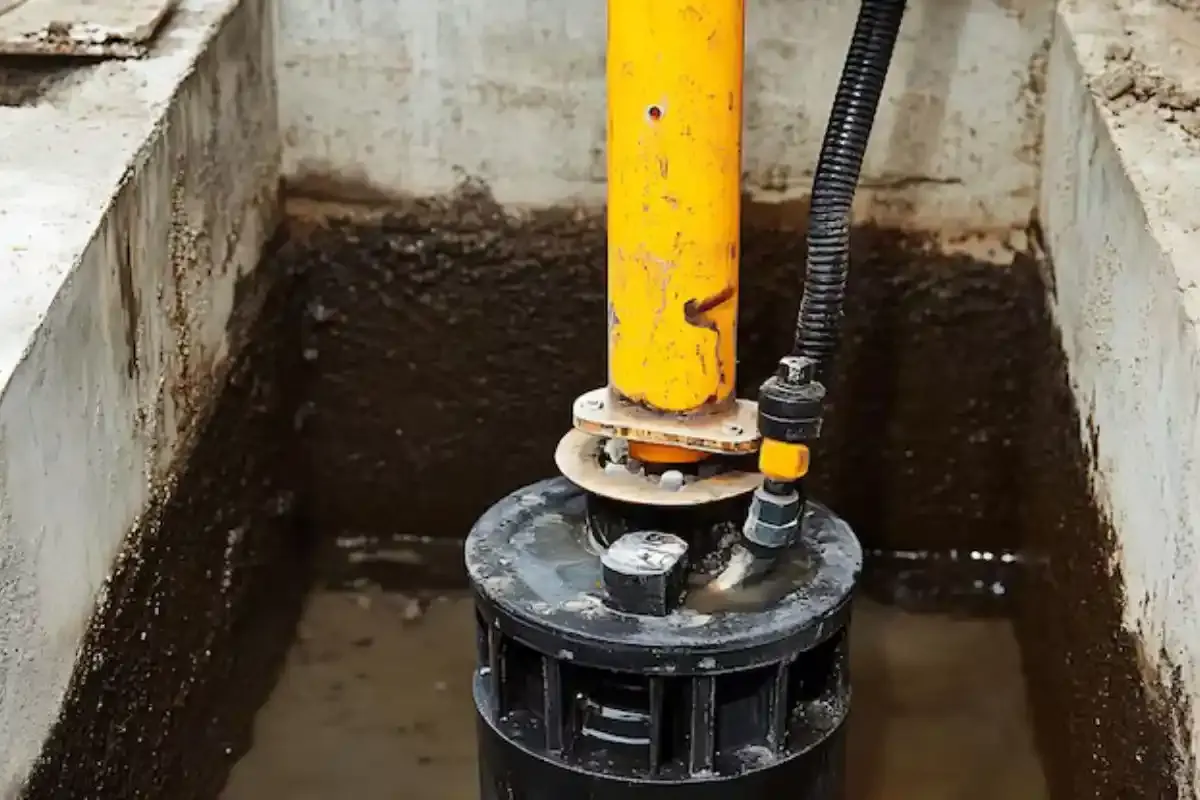
Seven signs the pump is on its way out
Most pumps give a warning before they quit. You just have to be standing in the basement to notice it.
- It runs all the time.. A pump that never shuts off may have a float stuck in the up position, or it may be undersized for the water coming in. Either way, it is wearing out fast.
- It never runs at all.. Pour water into the pit. If nothing happens, check the outlet and the breaker first, then the float. A dead pump in a dry week still needs attention before the weather turns.
- It hums but moves no water.. That sound usually means a seized impeller or a jammed check valve. Grit and small stones from the pit are common culprits.
- It cycles every few seconds.. Short cycling points to a float switch that is badly placed, or a check valve that lets water fall back into the pit after each run.
- Loud grinding or rattling.. Bearings or a damaged impeller. These get louder, not quieter.
- Rust, silt or a musty smell in the pit.. Mud buildup shortens motor life and can jam the float. A pit that has never been cleaned is a pit that will fail early.
- The pump is old and you do not know how old.. If you moved in as a renter or just bought, ask whether anyone has ever serviced it. Unknown age is a reason to test it, not to trust it.
None of these need a plumber on the first step. A few minutes with a flashlight tells you whether you have a simple clog or a pump that is finished.
Match the symptom to the likely repair
| What you see | Likely cause | Typical fix |
|---|---|---|
| Pump will not start | Tripped GFCI, dead switch, or burned-out motor | Reset power, replace the float switch, or replace the pump |
| Runs but pumps little or nothing | Clogged intake screen or worn impeller | Clean the intake, or replace the pump if the impeller is damaged |
| Turns on and off rapidly | Float binding on the pit wall or a failed check valve | Reposition the float, replace the check valve |
| Water flows back into the pit | Missing or stuck check valve on the discharge | Install or replace the check valve |
| Pump runs but pit still fills | Undersized pump or frozen or blocked discharge line | Clear the line, then size a new pump to the inflow |
| Pump works but only on city power | No battery or generator backup | Add a battery backup unit, covered below |
A five-minute pump test with a bucket
Do this when the weather is dry, not when the basement is already damp.
Look before you touch.
Check that the pump is plugged into a working outlet and that the cord is not frayed. If the outlet is a GFCI, press the reset button.
Clear the pit surface.
Remove the lid if there is one. Lift out any debris you can see, like gravel, a stray rag or a leaf mat. Wear gloves.
Fill the pit.
Pour about five gallons slowly into the pit from a bucket. Watch the float. It should rise and trigger the pump.
Listen and watch the discharge.
The pump should start, move the water out in a few seconds, and shut off cleanly. Water should leave through the discharge pipe, not splash back.
Repeat once.
A second run catches a float that sticks only after it has settled. If either run fails, stop and call. Do not reach into the pit with the pump plugged in.
If the pump passes, note the date. A pump that passes today can still fail in the next storm, so test it again each spring and after any long dry spell.
Repair it or replace it
A float switch, a check valve or a clogged screen is a cheap, quick repair on a pump that is otherwise sound. A failed motor, a cracked housing or a pump that has been replaced once already usually points to a new unit. The labor is about the same either way, so a new pump on an old, tired motor often costs less over time than patching.
We will tell you which one you have after looking, and we do not sell a replacement when a ten-minute fix will do. The price is clear before work starts. If the pit is cracked, undersized or full of silt, we will say so, since a new pump in a bad pit fails for the same reasons the old one did.
Our sump pump repair work covers the pump, the float, the check valve and the discharge line. If water keeps coming in faster than any pump should have to handle, the real fix may be outside the pump, which is where basement waterproofing comes in.
Not sure whether your pump needs a repair or a replacement? Tell us what it is doing and we will sort it out.
Call (847) 281-8626Backup power and discharge, the two things people skip
Power fails when the storm hits
The storms that fill a pit are the same storms that knock out electricity. A pump with no backup is a pump that stops at the worst moment. A battery backup unit sits beside the main pump and takes over when the power drops or the main pump fails. A water-powered backup is another route, but it depends on your water pressure and has its own limits, so ask before choosing one.
Where the water goes matters
A pump that moves water ten feet and drops it beside the foundation just recycles it into the pit. The discharge should carry water well away from the house and away from the neighbor's property. A line that sags can hold water and freeze in winter, so it should slope steadily and exit where it can drain freely.
What older rentals and mixed housing mean for your pump
Census figures put the median North Chicago home at about 1973, and roughly a third of the housing stock was built before 1960. Older foundations and older drain tile are more likely to leak at the walls or floor joint, so the pump works harder. About two out of three households here rent, which means many pumps belong to a landlord and a basement may be shared by several units.
If you rent, tell your landlord in writing when the pump fails or starts acting strange. If you own a multi-unit building, check the pit and the cord on a schedule. We can service the equipment either way, but the owner is the one who decides on repair or replacement.
The same questions come up across the border. Basements in Waukegan took the brunt of the 2017 storm in the county's records, and homeowners in Lake Bluff are told by their own village to plan for backup power. We work in both towns, and the pump advice above applies there too.
What the public flood records say about basements near North Chicago
North Chicago, Waukegan and Lake Bluff: what the published records show
The Lake County watershed plan names North Chicago in its account of the July 11 and 12, 2017 storm, when three to seven inches of rain fell across the area. A county survey afterward found 10 flood problem areas in North Chicago affecting 23 properties, including three sewer backups. The same plan reports that Waukegan had 106 flood problem areas affecting 185 properties from that storm, and that basement flooding made up more than half of the reports.
The Village of Lake Bluff's own stormwater master plan calls the July 2017 storm the storm of record, with more than seven inches in 12 hours, and notes that the village sits on mostly high-clay soil. The village's stormwater guidance says a sump pump needs a source of backup power, from a battery or a generator, and that downspouts should point away from structures.
We found no published North Chicago rule on sump discharge or downspouts, so ask the city building department before you change where a pump drains. The sewer provider, the North Shore Water Reclamation District, states that its sanitary and storm sewers are separate systems. That is one more reason to confirm which side a sump line may use.
Sump pump questions we hear
There is no honest single number. Pump life depends on how often it runs, how clean the pit is, and how well the float and check valve work. A pump that runs only a few times a year can last far longer than one that cycles all spring.
If you do not know when yours was installed, test it with the bucket method above and have it looked at before the wet season.
Yes. We are open 24/7, and a pit that is filling during a storm is the kind of call we want right away. Same-day appointments are available when schedules allow, and we will tell you on the phone what to do while you wait.
While you wait, stay out of the basement if water is near outlets, cords or the electrical panel, and call your electric utility if you are unsure. Do not wade in to check the pump.
Do not do it. The North Shore Water Reclamation District, which serves North Chicago, states that sanitary and storm sewers in its service area are separate systems. Sump water belongs on the storm side or on the ground well away from the house.
We did not find a published city rule on sump discharge, so ask the North Chicago building department before changing a discharge line.
If your basement has ever taken on water, yes. The storms that fill a pit often knock out power, and a pump with no backup stops when you need it. Lake Bluff's village stormwater guidance says the same thing, in plain terms, about backup power.
A backup unit also covers the case where the main pump simply fails. It does not replace a pit and discharge line that are in good shape.
Tell the landlord in writing right away and keep a copy. If the basement is taking on water, move belongings off the floor and photograph the damage. We can come out for an emergency visit, but the owner decides on repair or replacement.
About two thirds of North Chicago households rent, so this comes up often.
A pump that works before the rain starts
Call us for a pump check or a repair, day or night. We will find the cause and give you the price before work begins.
Call (847) 281-8626