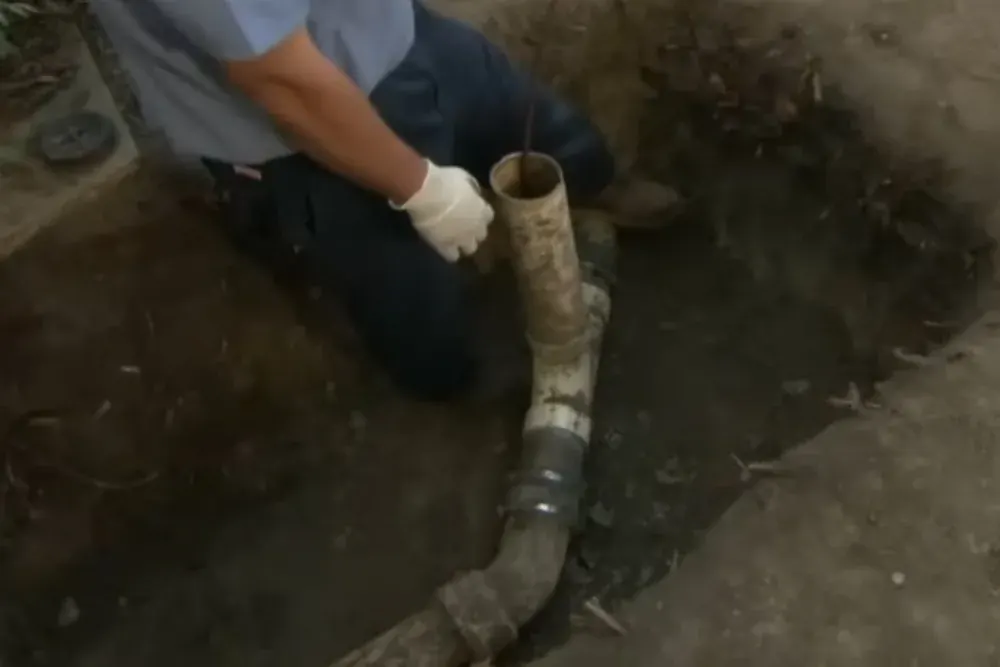
Signs that point to a break and not a clog
Warning signs worth taking seriously
- More than one drain acts up. A clog in one sink stays in that sink. When the tub gurgles as the washer drains, the shared line is the suspect.
- Backups keep returning after cleaning. A line that is cleared and then fails again within weeks often has a crack, a belly, or a root intrusion that cleaning does not cure.
- A soggy or sunken spot in the yard. Waste water escaping near the line can soften soil, green up the grass, or cause a dip over the pipe.
- A sewer smell outside. Odor near a cleanout, a basement floor drain, or a patch of lawn can come from a broken pipe.
- Slow drains in the lowest bathroom. The lowest fixture feels trouble first, because it is closest to a blockage or break.
None of these proves a break by itself. Together they tell a plumber where to look. The next step is a camera, not a shovel.
Why sewer lines fail
Age and material
Older homes may have clay, cast iron, or fiber pipe that cracks, flakes, or separates at the joints over many decades.
Roots
Roots find tiny gaps at joints, grow into the pipe, and push the seam wider. The pipe still carries flow until the roots catch debris.
Ground movement and loads
Frost, heavy vehicles, and settling soil bend pipe and open joints. A low spot, called a belly, then holds waste.
In North Chicago, the median home was built in 1973, but 32.3 percent were built before 1960, according to the Census. A pre-1960 house is the one where we expect older pipe material to show up on camera.
The city's sewers are provided by the North Shore Water Reclamation District, which states that sanitary and storm sewers in its service area are separate systems, so rain should not be entering your sanitary line through the street. Cracks in your own lateral can still let groundwater in.
How a camera inspection finds the break
A small waterproof camera on a flexible cable goes into the line through a cleanout or a removed toilet. The picture shows cracks, offset joints, roots, bellies, and where the pipe changes material. A locator on the surface marks the depth and position of any defect, so a repair can focus on a few feet instead of the whole run.
We recommend a recording before any repair is priced. It gives you proof of the condition and lets you compare repair options with facts. Our sewer camera inspection service is built for this, and the recording is yours to keep.
Repair options, from small to large
| Method | What it is | Best for | Limits |
|---|---|---|---|
| Spot repair | Dig down, cut out the damaged piece, replace it | One short failed section | Needs access to that spot and restoration of the surface |
| Liner | A resin-coated sleeve is pulled into the pipe and cured | Cracks and joint leaks in a pipe with a sound shape | Does not fix a collapsed or badly sagging pipe |
| Pipe bursting | A new pipe is pulled in as the old one is broken apart | Longer runs with known entry points | Needs pits at each end and a suitable path |
| Full replacement | Open-trench removal and new pipe | Collapsed, offset, or heavily bellied lines | Most disruption to lawn, drive, and landscaping |
The right method depends on what the camera shows, how deep the pipe is, what sits above it, and what your town allows. We explain the trade-offs and tell you which method we would choose. Our sewer line repair crew handles the digging, the pipe work, and the backfill.
What to do while you wait for help
Stop using water
Every flush, shower, and load of laundry adds to the backup. Tell everyone in the home.
Keep people and pets out of the wet area
Sewage carries bacteria. Wear gloves and boots if you must walk through it, and keep children away.
Turn off power to a flooded basement only if you can do so safely
If water is near the panel or outlets, stay out and call your electric utility or an electrician.
Do not pour chemicals down the drain
Drain cleaner will not fix a broken pipe, and it makes the later work hazardous.
Call us
We answer around the clock. Tell us which fixtures are affected and what you see in the yard.
Take photos of the damage and list what was affected. If you plan to make an insurance claim, a record from the first hour is valuable.
Waukegan and Lake Forest: permits, flooding, and who maintains what
Sewer repair rules and flood history in Waukegan and Lake Forest
Waukegan's sewer page says permits are required for installing cleanouts, making sewer repairs, and doing replacement work on private sewer lines, and that the application goes in online before the work starts. Registered excavators with a bond may dig for discovery only, contractors pay an annual registration fee, an inspection is required before the work is covered, and fees double when work begins without a permit. The city collects sewage, and the North Shore Sanitary District treats it.
On flooding, the Lake County Lake Michigan watershed plan counts 106 flood problem areas affecting 185 properties in Waukegan in July 2017, the most of any listed municipality, and says more than half of the 2017 flood reports were basement flooding including sewer backups. It also notes sanitary sewer backups during the April 2013 rainstorm across the planning area.
Lake Forest states that it maintains two separate systems of sewers, sanitary and storm, and that sanitary wastewater goes to a treatment plant on Clavey Road operated by the North Shore Sanitary District. The city lists a sewer permit for sanitary or storm work and cites flushable wipes as one cause of sewer backups.
Call 811 before any digging so utility lines are marked. Learn more about our service in the Waukegan plumbing area and in Lake Forest, both close to our dispatch address on Skokie Highway.
What changes the price
Sewer repairs vary more than almost any other plumbing job, and these are the reasons.
Want a clear price after the camera shows the damage?
Call (847) 281-8626Seeing the signs above? Call and we will schedule a camera look at your line.
Call (847) 281-8626Sewer line questions we hear
No. A crack only grows, and a belly only collects more waste. Waiting lets soil wash into the pipe and can lead to a sinkhole or a basement backup. The cost usually rises the longer a break is left alone.
The city says permits are required for cleanouts, sewer repairs, and replacement work on private sewer lines, and the application is made online before work starts. Registered excavators with a bond may dig for discovery only. We confirm the current steps with the city before scheduling the repair.
No. The camera is a small flexible tool that rides along the pipe. It gives a clear recording without digging, and it tells us if the pipe can take a liner or needs replacing.
A camera and a locator can tell. If the break is in your own lateral, the repair is yours. If the trouble is in a public main, the local utility handles it, and we will tell you what we see so you can report it. In Lake Forest, the city maintains the collection sewers.
Yes. A sewer backup does not wait for Monday, so we are open 24/7. Stop using water, keep people out of the wet area, and call.
Find out what is wrong before anyone digs
Call and tell us what the drains are doing. We will arrange a camera look and give a clear price before any repair begins.
Call (847) 281-8626