Start with what is already there
The cheapest installs are like-for-like swaps: same fuel, same size, same location, and the connections line up. The tank slides out, the new one goes in, and the lines reconnect. Anything that breaks that pattern adds labor or parts.
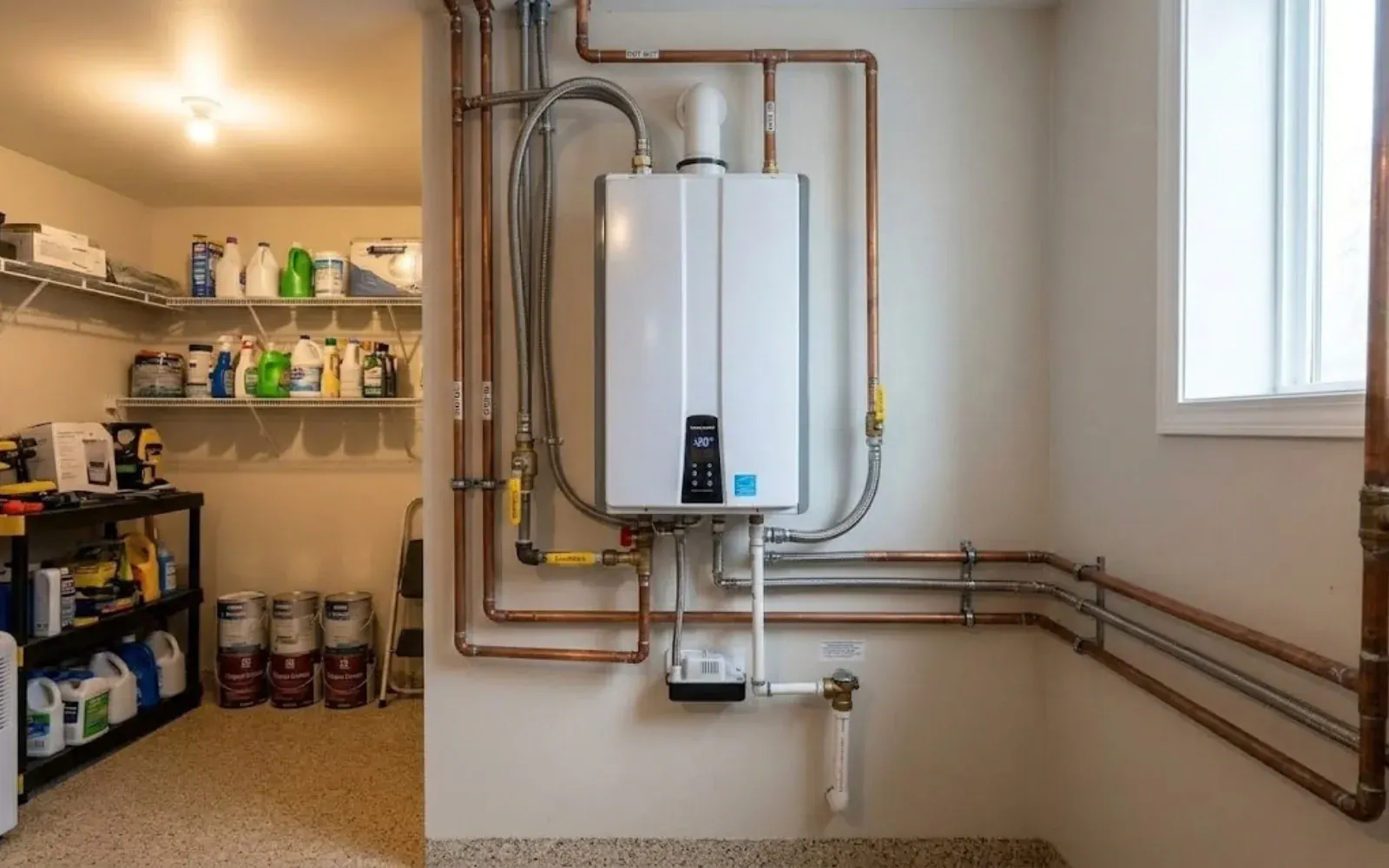
Before you ask for a price, note the fuel (gas or electric), the tank size on the label, where the heater sits, and what is around it. A photo of the label and the venting is the most helpful thing you can send. It lets us flag problems before the visit, not after the old tank is already drained.
The six things that move the price
What changes the price
Every quote for a tank heater is some mix of these factors. None of them is a trick. They are the real work.
Send us a photo of your label and venting, or call and we will price it clearly.
Call (847) 281-8626Common situations and which way the price tends to go
| Your situation | Price direction | Why |
|---|---|---|
| Same fuel, same size, same spot | Lowest | Little new work beyond the tank itself |
| Old, corroded vent pipe | Higher | Venting must be replaced to be safe |
| Moving the heater to a new location | Higher | New supply, drain, vent and fuel runs |
| Switching between gas and electric | Considerably higher | New fuel line or new electrical circuit |
| Upgrading to a larger tank | Moderately higher | Bigger unit and sometimes new fittings |
| Emergency after-hours replacement | Higher | Short notice and off-hours labor |
| Tight attic or second-floor install | Higher | More labor and difficult access |
Tank or tankless: the cost question behind the cost question
A tank costs less to buy and install, takes more floor space, and stores hot water that cools down. A tankless unit costs more up front and often needs bigger gas lines or electrical service, but it takes less room. Neither is a better choice in every home. The right answer depends on your household, your space and your fuel.
If you are not sure, tell us how many people live in the home and how many showers run at once. We would rather size the tank right than sell you the most expensive unit. If you are deciding between replacing a failed heater and installing a first one in a new space, see our notes on water heater installation and water heater replacement.
What install day looks like
Shut off and drain
Fuel or power is turned off, the cold supply is closed, and the old tank is drained to a floor drain or outdoors.
Disconnect and remove
Water lines, vent and fuel connections come off. The old tank is moved out.
Set the new tank
The new heater goes on a level base, with a drain pan where needed.
Connect and vent
We connect the water, then the gas or electric supply, and the vent. Every joint gets checked for leaks.
Fill, test and explain
We fill the tank before turning on fuel or power, light or energize it, check the flue draft on gas units, and show you the shutoffs.
Before We Arrive
Clear the area
Move boxes and stored items three feet back so we can work around the tank.
Find the shutoffs
If you can, locate the main water shutoff and tell us where the gas valve is.
Note the label
Take a photo of the data plate showing fuel, size and model.
Plan for no hot water
A typical replacement means a gap in hot water, so plan showers and laundry around the visit.
North Chicago homes and what they mean for the quote
About two thirds of North Chicago households rent, and only about 37 percent of housing units are single-family detached homes. About 28 percent of units are in buildings of five or more units. A building like that may have a shared heater room or several units on one system, and that changes both the work and who approves it.
The city's own water comes from Lake Michigan and its reports list chlorine as the disinfectant, but no hardness figure. Scale buildup inside a tank cuts efficiency and shortens its life, so a cheap tap test is worth doing if your last heater died young. If you rent, the owner decides, and a written quote helps the conversation.
Permits near North Chicago
A permit may be part of the cost. In Waukegan, the city's plumbing page says permits are required for all plumbing revisions and for replacing hot water heaters. In Lake Forest, the city lists a residential Water Heater Permit among its building permit applications, and says to ask the department whether your replacement needs one.
What the city pages say about water heater permits and codes
Waukegan's own plumbing page says permits are required for all plumbing revisions and the replacement of hot water heaters, and it requires contractor registration. Lake Forest's building permit page lists a Water Heater Permit for residential work, and the city's code adopts the Illinois State Plumbing Code with its own changes in Chapter 150.
North Chicago's building department page lists the Illinois Department of Health Plumbing Code and the fuel gas and mechanical codes among its adopted codes. It does not describe a plumbing permit process and has no water heater information, so call the city's inspection and permit office before you sign a quote that assumes either answer.
Cost and permit questions
Quotes often differ in what they include. One may leave out the permit, haul-away, new vent pipe or code parts, and another may list them. Ask each contractor for a line-by-line scope.
The cheapest quote on paper can become the most expensive once missing parts are added.
Yes. We are open 24/7. A tank leaking onto the floor or a heater with no hot water in winter is a priority call, and same-day appointments are available when schedules allow.
Shut off the water and the power or gas to the heater if you can reach them safely. If you smell gas, leave the building and call the gas utility or 911 first.
The city's building department page does not describe a plumbing permit process or water heater rules, so we do not want to guess. Ask the department before work starts. Nearby Waukegan states that permits are required for hot water heater replacement, which is a reason to ask rather than assume none is needed.
We can file or help you file whatever the city asks for.
For a simple failed part on a younger tank, repair is usually cheaper. For a leaking tank, repair does not help, because a leak in the tank wall cannot be patched. Age, rust and repeat failures all point toward replacement.
We will tell you which side of the line you are on.
It can, since a bigger tank holds more heated water that cools between uses. A tank that is too small runs out. Size it for the number of people and the peak demand.
We help match the size to your household before you buy.
A written price before the old tank comes out
Call us with your fuel, tank size and location, and we will explain what will move your quote. Open 24/7.
Call (847) 281-8626