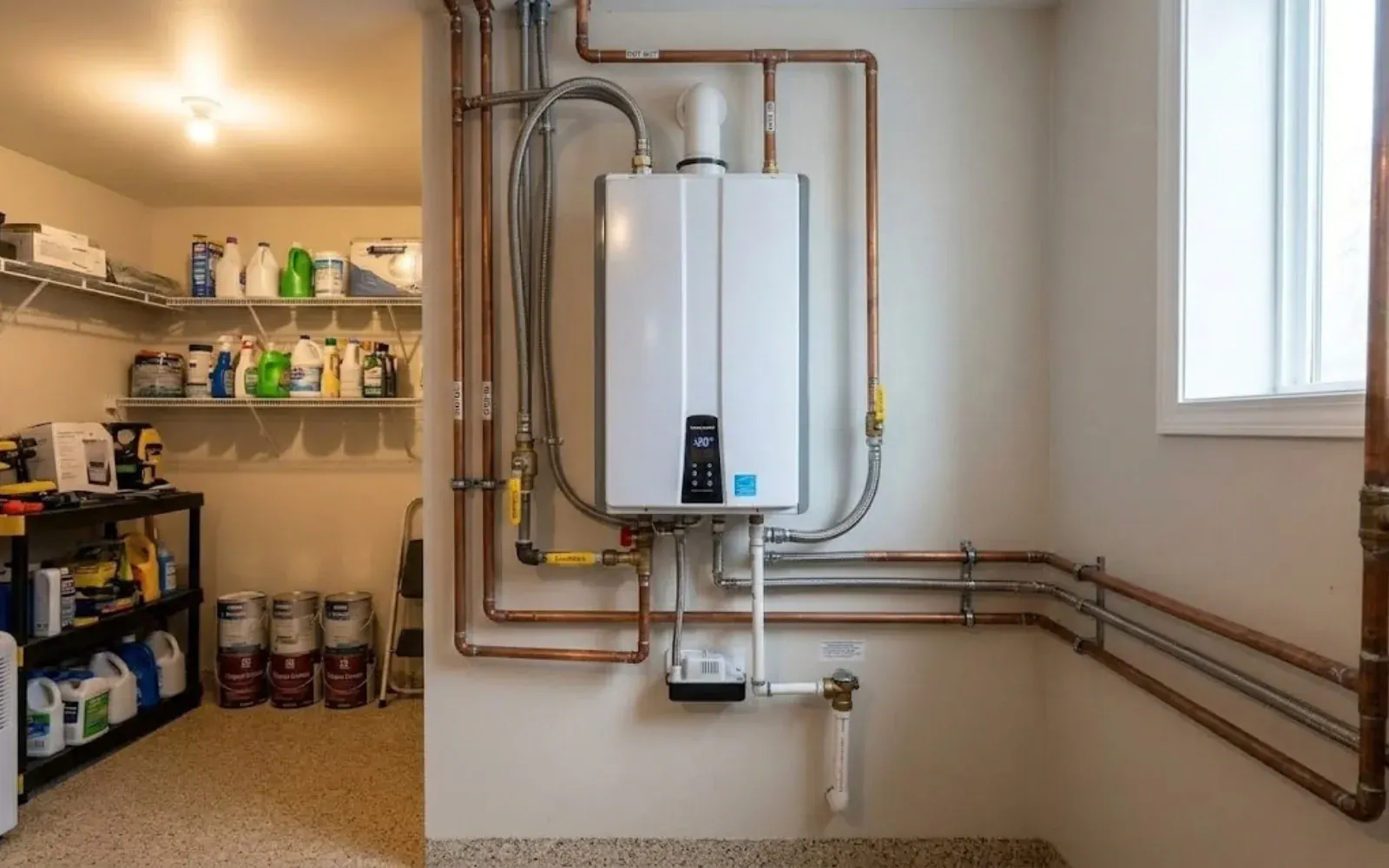
How an install day runs, start to finish
Check the fuel, the space and the vent
Before anything is ordered we look at the gas line or electric circuit, the flue path, the floor drain and how much room the tank has. Surprises here are what turn a simple swap into a long day.
Drain and disconnect the old tank
We shut off the water, drain the tank, and take apart the old connections. Corroded shutoff valves get replaced rather than reused.
Set and connect the new unit
The new tank goes on a level base with fresh water connections, a relief valve with a proper discharge pipe, and a vent or electrical hookup that matches its fuel.
Fire it up and test
We check gas joints, confirm the flue draws, run hot water at a fixture, and show you where the shutoffs and the temperature setting are.
Sizing for a house, a rental unit or a six-flat
Only 37.5% of the homes in North Chicago are single-family detached houses. The rest are attached homes, duplexes, small walk-ups and larger complexes, and 28.2% of all units sit in buildings with five or more units. About two-thirds of households rent.
That mix matters because one tank rarely fits every setup. A one-bath apartment, a four-bedroom house and a building with a shared boiler room each need a different answer, and a landlord replacing a tank usually wants the same size back with less downtime for tenants. We size by household and fixtures, not by what the last tank happened to be.
| Setup | What decides the size | What we check on site |
|---|---|---|
| Apartment or condo, one or two people | Number of baths and how often showers overlap | Closet clearance and whether the vent is shared |
| Single-family house, family of four | Morning demand and a large soaking tub, if any | Gas line capacity and the age of the flue |
| Duplex or small multi-unit | One tank per unit or one for the building | Which tenant or owner controls the shutoff |
| Basement utility room | Whether the tank stays or moves | Floor drain, drip pan and combustion air |
Gas, electric and the vent question
A gas tank burns fuel and has to push exhaust out of the building. If the vent is cracked, undersized or pitched wrong, exhaust can spill into the room. North Chicago's building department lists the 2021 fuel gas and mechanical codes among the codes it has adopted, so vent routing and clearances are part of what we confirm, not an afterthought.
Electric tanks skip the flue but need the right breaker and wire gauge. If the panel is already full, say so when you call. Switching fuel is possible, but it means new gas piping or a new circuit, and the price changes with it.
If you smell gas
Leave the building first. Call your gas utility or 911 from outside. Do not flip switches, light anything or return until the utility says it is safe.
Permits, licensing and who may do the work
Ask the city before the old tank comes out
The building department page for North Chicago does not describe a plumbing permit process for water heater swaps, so the safe move is to ask the Inspection and Permit office at City Hall, 1850 Lewis Avenue, before work starts. Rules can differ for rentals and multi-unit buildings.
In Illinois, plumbers are licensed by the Illinois Department of Public Health, and you can look up a license on the state's verification page. Ask any plumber for the license and check it yourself.
Same tank again, a different size, or tankless?
Most swaps go back to a tank, because it is the simplest fit for an existing closet or basement corner. If you want endless hot water and have the gas supply for it, read about a tankless water heater, which needs a larger gas line and different venting.
If your tank is only misbehaving, a water heater repair may cost less than a swap. A pilot that will not stay lit or a tank that has stopped heating can be a failed part. A tank that is leaking from the shell cannot be fixed, and that case belongs on the water heater replacement page. Sediment rumbling and rusty hot water are signs the tank is near the end.
Signs a tank is past repairing
- Water pooling under the tank from the shell, not from a fitting
- Rust-colored hot water that clears up when you run the cold tap
- A tank old enough that you cannot find its date on the label
- Repeated repair calls within a single year
What changes the price of a new tank
What moves the price
A straight like-for-like swap costs less than a job that changes fuel, size or venting. These are the factors we weigh in your price.
Tell us what you have now and we will give you a clear price before work starts.
Call (847) 281-8626Getting the space ready
Before We Arrive
Clear three feet around the tank
Move boxes, paint cans and laundry baskets so the crew can reach the unit and the shutoffs.
Photograph the data label
The label shows size, fuel and model. A photo helps us arrive with the right parts.
Tell tenants or neighbors
If the building shares a water line, warn others that the water will be off for a while.
Know where the main shutoff is
If you cannot find it, tell us on the phone and we will help you locate it.
Water heater installation questions
Yes. We are open 24/7, and a tank that is leaking or flooding a floor is treated as urgent. A planned install is scheduled for a same-day appointment when available, otherwise the next open slot. The same goes for neighbors in Waukegan, just north of the city line.
A straight swap with healthy connections usually takes a few hours. If the vent, the gas line or the electric circuit needs work, plan on longer. We tell you what we expect once we have seen the space.
Yes. We install gas and electric tank units. We do not move a gas appliance without checking the vent and gas piping first.
North Chicago's building page does not spell out a permit process for water heaters, so ask the Inspection and Permit office at City Hall before the work starts. We can tell you what we plan to install so you can answer their questions.
Usually the landlord has to approve it, because the tank belongs to the building. Ask your landlord first, then have us call you to schedule once they agree.
Installation covers new tanks in new spots, fuel changes and first-time setups. If your old tank has failed and the new one goes in the same place, see our water heater replacement page.
Ready to schedule your new tank?
Call and tell us the fuel, the size and the address. You get a clear price before work starts.
Call (847) 281-8626