The five-minute meter test
Every other method on this page is easier once you know whether a leak exists at all.
Your water meter counts every gallon that enters the building. If the count keeps climbing when nothing is running, the water is going somewhere you cannot see. The test costs nothing and takes about as long as a cup of coffee.
Stop every use of water
Turn off the dishwasher, washing machine, ice maker and humidifier. Make sure no one flushes a toilet during the test.
Read the meter
Lift the cover and look for the small triangle or wheel, often called the low-flow indicator. Note its position or write down the full number.
Wait 15 to 30 minutes
Do not touch any tap. A longer wait catches slow leaks that a short one misses.
Read it again
If the wheel turned or the number moved, you have a leak. If it did not move, check for a leak that only runs while a fixture is in use, such as a toilet that refills on its own.
One more check separates a leak inside the house from one in the buried line. Close the main shutoff valve inside your home, then look at the meter again. If it still moves with the house valve closed, the loss is in the pipe between the meter and that valve.
Seven methods and what each one actually finds
No single tool finds every leak. A good plumber picks the method to match the symptom, and often combines two. This table shows where each one earns its place and where it falls short.
| Method | Best at finding | Where it falls short |
|---|---|---|
| Meter test | Whether any leak exists on the property | Cannot say where the leak is |
| Pressure test | Leaks in a section of supply pipe, by isolating it and watching for a pressure drop | Needs shutoffs to isolate zones, so it narrows a leak to a section rather than a spot |
| Acoustic listening | Pinhole leaks and pressurized breaks in supply lines, including buried ones | Plastic pipe and noisy surroundings muffle the sound |
| Thermal imaging | Hot-water leaks and wet insulation behind drywall or under floors | Cold-water leaks show faintly, and the camera sees surfaces only |
| Moisture meter | Damp drywall, subfloor and framing around a suspected spot | Confirms wetness but not the source, which may be several feet away |
| Dye or tracer test | Toilet tank leaks and drain connections that seep only under use | Does not help with pressurized supply lines |
| Camera inspection | Cracked or broken drain and sewer lines | Drain pipes only, so supply leaks are invisible to it |
Notice that the cheapest tools come first. A plumber who opens a wall before running a pressure test or listening along the pipe is guessing. We would rather confirm the location, then cut a small access hole exactly where it is needed.
Match the method to what you are seeing
A warm patch on the floor
Heat on a slab or tile points to a hot-water line under the floor. Thermal imaging and a pressure test on the hot side usually settle it.
A water bill that jumped
Run the meter test first. A moving dial with everything off means a hidden leak, and a pressure test shows whether it is inside or outside.
Running water you can hear at night
Acoustic listening is the right tool here. The sound often travels along the pipe, so the loudest spot is not always the leak.
A brown stain on a ceiling
Water travels downhill and sideways before it shows. A moisture meter and thermal camera trace the stain back to the pipe above it.
If your symptom sounds like more than one of these, that is normal. Leaks rarely read the textbook, and our leak detection visits usually start with the meter and a quick look at every fixture before any equipment comes out.
Why older North Chicago buildings hide leaks differently
The median North Chicago home was built in 1973, and 32.3% of homes date from before 1960. Pipes from the older group are more likely to be galvanized steel or early copper, and galvanized lines corrode from the inside out. That tends to produce pinholes and weak elbows rather than one dramatic burst, which is why we check fittings and bends first.
About 67.4% of households here rent, and many live in multi-unit buildings. In those buildings a leak may start in a neighbor's unit or in a shared riser. If you rent, report the stain and the meter reading to your landlord in writing, take dated photos, and keep water away from outlets until someone has looked.
The city supplies its own water from a Lake Michigan plant, and it is the city meter that records every gallon your building uses. That makes the meter test described above a reliable first step in any North Chicago house or apartment building.
When the leak is in the buried line
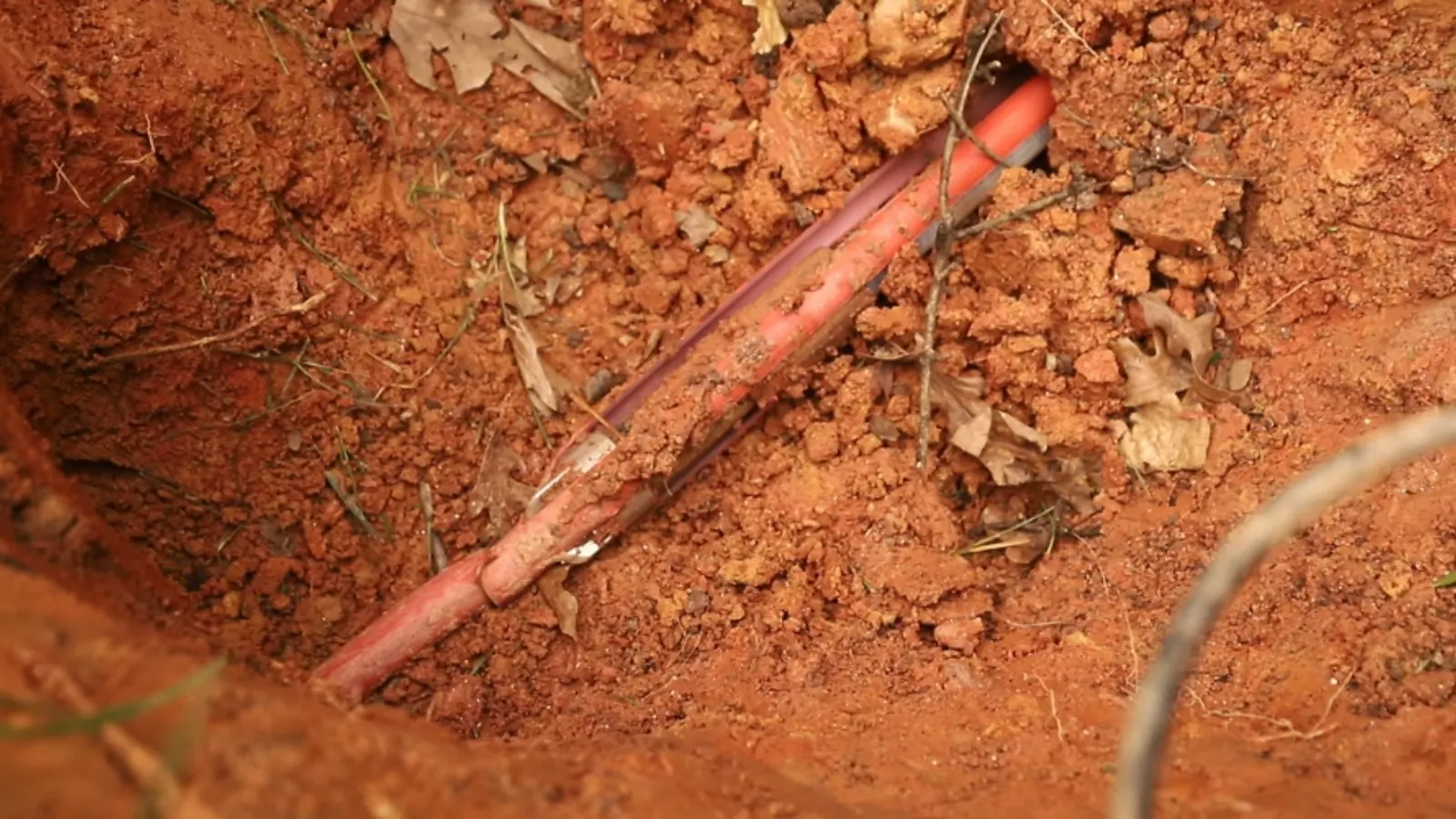
The service line runs from the water main to your meter and into the house. It sits underground, so the signs are indirect: a soft or unusually green patch of lawn in dry weather, a sudden drop in pressure, or a meter that spins with the house valve closed. Listening gear pinpoints the break so only a short trench is dug.
Fixing it is a different job from finding it. A cracked or corroded line may be repaired in one spot or replaced, and our water service line repair work starts with a confirmed location and a clear price before digging begins. In Illinois, a JULIE call (811) comes before any digging so buried utilities get marked.
Signs the leak is outside the house
- The meter moves with the main valve inside the house closed
- A wet or sunken patch above the line path with no rain
- Pressure that dropped at every tap at once
- Water noise at the meter or where the pipe enters the basement
What a visit looks like
We ask what you have seen
Where the stain is, when the bill changed, whether the leak runs all the time or only with certain fixtures.
We run the meter and pressure checks
These tell us whether the leak is on the supply side, the drain side, or inside one fixture.
We listen and scan
Acoustic gear and a thermal camera narrow the search to a few feet.
We give you the price before repair work
You see the location, the options and a clear price before anything is opened or dug.
A leak you cannot see still costs money every hour. Let a plumber trace it with proper tools and tell you plainly what the fix involves.
Call (847) 281-8626Notes for neighbors in Libertyville and Lake Bluff
We also trace leaks for homeowners in Libertyville and Lake Bluff, a few miles from the 3100 Skokie Highway shop where our trucks dispatch. Each village runs its own distribution system, and the two handle service lines in ways that change who calls whom.
Libertyville and Lake Bluff: who owns which pipe
Lake Bluff states that the entire water service line is owned by the homeowner, and that maintenance and repair of the private line is the homeowner's responsibility. If your meter shows a leak between the street and the house, plan on hiring the repair yourself rather than waiting for the Village.
The Village also notes that when it upgraded meters between 2019 and 2021, it identified probable service line materials and wrote to properties with suspected or known lead lines. If you did not get a letter, the Village says it does not suspect lead in your line.
Libertyville has bought Lake Michigan water through the Central Lake County Joint Action Water Agency since May 1992, and the Village maintains its own distribution system. It has published a Water Service Material Inventory as an online dashboard and offers a voluntary cost-sharing program for lead line replacement. The Village says lead lines were commonly installed before World War II, so a leak repair on an older Libertyville property is a good time to ask what material your line is.
Sources: Village of Lake Bluff lead service line page and water quality report, Village of Libertyville water and lead service line pages.
Questions about finding a hidden leak
Often yes. Pressure testing and acoustic listening locate most supply leaks from the outside, and a thermal camera shows wet or warm areas on the surface. We still cut a small opening to confirm and repair, but it is placed where the evidence points, not guessed.
Drain leaks are different. A camera run through the line is the way to see them.
Fifteen minutes catches a moderate leak. For a slow one, such as a toilet flapper or a small pinhole, wait thirty minutes or test again before bed and first thing in the morning with no water used overnight.
If the dial barely moves, write down the full number so you can compare it hours later.
The Village of Lake Bluff says the whole service line belongs to the homeowner, so repair of the private line is your responsibility. A leak in the public main in the street is a different matter, and Public Works handles it.
If you are unsure which side of the line the leak sits on, call us. We will find the spot first, and you can decide who needs to be called.
No. Toilet tank dye is a few drops of food-grade color. If the color shows up in the bowl without a flush, the flapper or seat is leaking and the fix is a small part, not a big repair.
If water is visibly spraying, pooling or soaking a ceiling, yes. Close the main shutoff, open the lowest faucet to drain the lines, and keep electronics and outlets away from the wet area.
If the leak is small and slow, you can leave the water on and keep a dated record of the meter.
Find the leak before it finds your ceiling
A plumber with the right tools can trace most hidden leaks to a few feet. Call and we will tell you what to expect.
Call (847) 281-8626