Signs the pipes in your walls are wearing out
Pipes rarely fail without warning. Water pressure fades over months. A shower that used to be strong now trickles. Hot water takes longer to arrive, or the faucet spits rust-colored water for a minute after the house sits idle.
Leaks are the other clue. One pinhole in a copper line can be fixed with a burst pipe repair visit. Three in the same year usually mean the whole run is thinning from the inside. Stains on a ceiling or a damp spot on a basement wall are worth a call before the drywall goes soft, and if the source is unclear we can start with leak detection.
Repipe warning signs
- Rust or brown tint in the water, mostly in the morning
- Low pressure at several fixtures, not just one
- Pinhole leaks or green crust on copper joints
- Visible rust, flaking or swelling on steel pipe
- A repair that failed again close to the first fix
Galvanized steel and why it fails from the inside
Galvanized pipe is steel with a zinc coating. The coating wears away, rust builds on the inner wall, and the opening narrows until little water gets through. A house with galvanized supply lines can have good pressure at the street and poor pressure at the tub.
Cutting into galvanized pipe also shows how bad it is. If we find the opening mostly closed, a spot repair buys little, and the next joint tends to fail soon after. In that case we show you the cut section and talk through a repipe in stages.
Your service line, and the pipes behind it
North Chicago's lead line inventory
The city's own lead service line plan lists 5,653 service lines. Of those, 849 are lead and another 144 are galvanized lines marked for replacement. A free replacement phase covers eligible properties east of Green Bay Road, south of Argonne Road and north of Broadway Avenue.
That program deals with the pipe from the water main to your house. The pipes inside your home are a separate matter, and a repipe is the way to replace them. If you are in the city's program area, ask about the service line first and plan your interior repipe around it. See our water service line repair page for the outside pipe.
Copper, PEX or a mix: choosing the new pipe
Both copper and PEX are used for home supply lines. Copper is rigid and long-lasting, and has a long track record in homes. PEX is flexible plastic, easier to run through finished walls, and does not corrode from the inside the way old steel does.
| Factor | Copper | PEX |
|---|---|---|
| Walls and ceilings | More cutting, more patching | Snakes through with fewer openings |
| Joints | Soldered, each one a skill point | Crimped or expanded fittings |
| Cold climates | Can burst when frozen | Tolerates some freezing but should still be protected |
| Water chemistry | Pinholes in aggressive water | Not subject to the same corrosion |
| Cost | Usually higher | Usually lower |
We discuss which one suits your house, and sometimes the answer is copper in the basement and PEX upstairs.
How a repipe works in a home you are living in
Survey and plan
We trace the existing lines, count fixtures and mark where new pipe will run.
Rough in the new lines
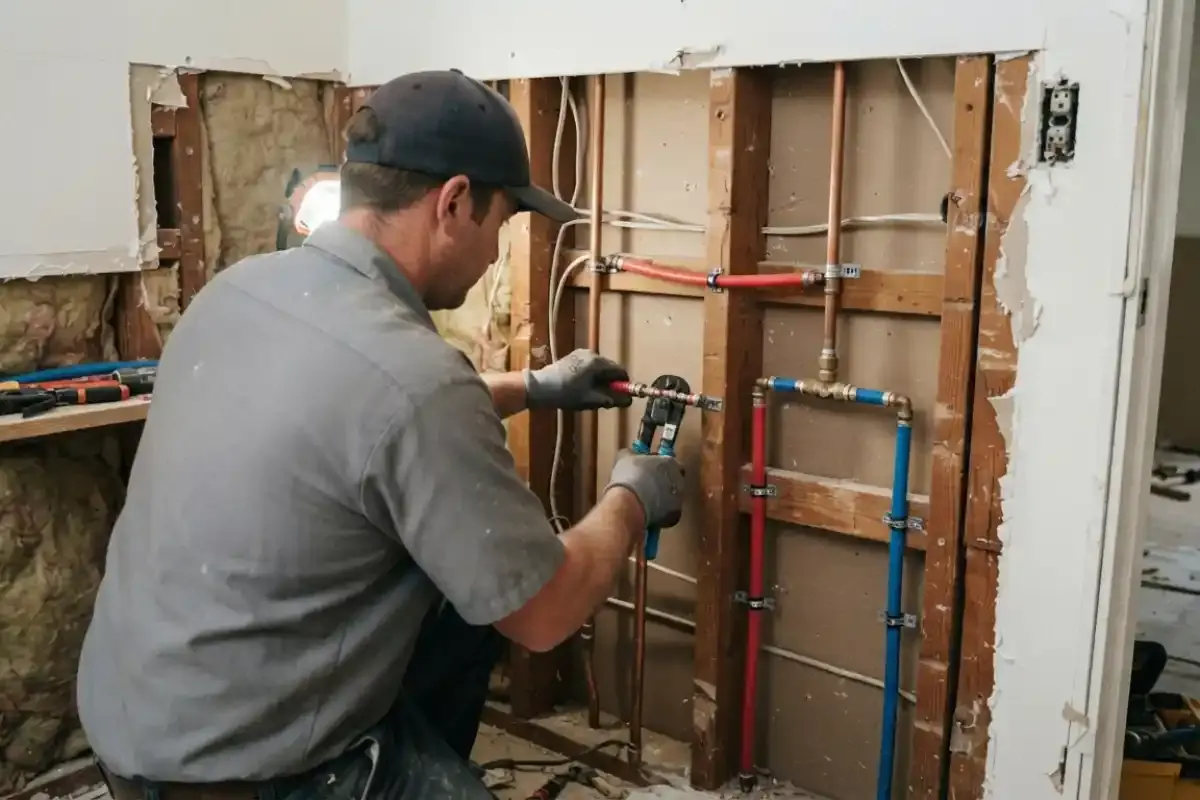
New pipe goes in beside the old, through basements, crawl spaces and the smallest wall openings we can manage.
Switch over
We shut water, connect fixtures to the new lines, and pressure-test before closing anything.
Remove or abandon the old pipe
Old lines that can come out easily do. Others are capped and left in place where removal would harm the structure.
Patch and review
We close access openings and walk you through the work. Finish painting is yours, and we say so in advance.
Price drivers for a repipe
What changes the price
No two repipes are the same, so we look at the house before pricing it.
Have us look at the pipes and give you a clear price before work starts.
Call (847) 281-8626Repiping questions, answered
Yes. We are open 24/7. A pipe leaking into a ceiling or floor is an emergency. The repipe itself is planned, with a same-day appointment when available for the first look.
One leak does not. Several leaks, rust in the water and weak pressure at many fixtures point toward it. We inspect and tell you honestly if a spot repair is enough.
Usually yes. Water is off for part of each work day and we plan around it. In a multi-unit building we coordinate with the owner.
That is a separate job, covered on our service line page. The city also runs a lead line replacement program in parts of North Chicago.
Some, yes. PEX can reduce the number of openings. We tell you where they will be before we start.
Yes. We also work in Libertyville and the rest of Lake County.
Get a look at your pipes
Call with what you are seeing. We will tell you what we would check and what the options are.
Call (847) 281-8626