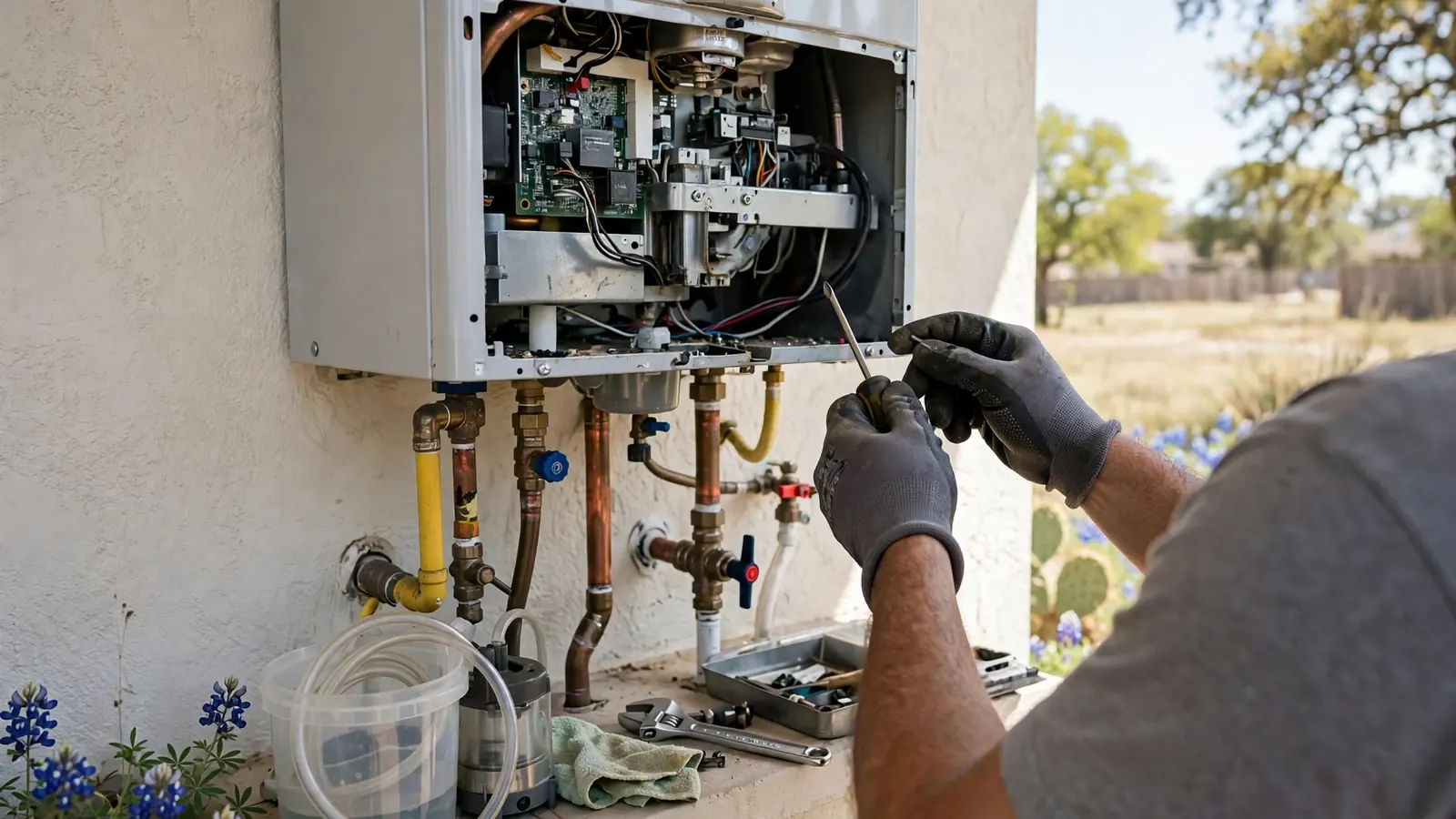
What a tankless unit needs from your house
The surprise with tankless is rarely the heater. It is the gas line. A unit that fires hard for a long shower can draw several times what a tank burner does, so the pipe from the meter has to carry it without starving other appliances.
We check four things before quoting: the gas pipe size and length, the vent path to the outside, the water pressure and flow at your busiest fixture, and where the condensate drains. High-efficiency units make acidic condensate that needs a proper drain, not a floor.
What we measure on the first visit
- Gas supply. Pipe diameter, run length and the meter's rated capacity.
- Vent route. Distance to an outside wall or roof, and clearances to windows.
- Water demand. How many fixtures run at once in your household.
- Drain and power. Where condensate goes and whether an outlet is within reach.
Lake Michigan water and what it leaves behind
North Chicago's tap water comes from Lake Michigan, treated at the city's own plant on Lakeview Drive. The city's water quality reports do not publish a hardness number, and hardness is what drives scale inside a tankless heat exchanger. That means the safest plan is to treat scale as a maintenance item, not a rumor.
In practice we ask you to test your tap with a hardness kit or read the city's latest report, and then set a flush schedule from what you find. If scale turns out to be heavy, a water softener or filter ahead of the heater protects the warranty and the flow.
Flushing and descaling a tankless heater
This is the most common tankless service call, and it is planned, not urgent.
Over time, minerals coat the heat exchanger and the water flow narrows. You may see lukewarm water, a unit that shuts off mid-shower, or an error code that comes back after a reset. A flush pushes a descaling solution through the unit and rinses it clean.
Isolate the unit
We close the water and gas supplies and open the service valves, which most installs include.
Circulate descaler
A pump moves a mild acid solution through the heat exchanger for a set time.
Rinse and clean the filter
We flush with clean water and clear the small inlet screen that catches grit.
Restart and confirm
We bring the unit back up, check the error history and test hot water at a fixture.
If your unit has no service valves, say so when you call. We can add them, and they make every later flush faster.
Tankless versus a standard tank in an older house
North Chicago's median house was built in 1973, and about a third of the housing was built before 1960. Older homes often have a small gas line, a chimney flue built for a tank, and tight utility closets. Switching to tankless in these homes can mean new piping and a new vent, which changes the price more than the heater does.
| Question | Standard tank | Tankless |
|---|---|---|
| Hot water during back-to-back use | Runs low, then recovers slowly | Steady, until you exceed its flow rating |
| Gas line and vent changes | Often reuses what is there | Often needs a larger line and new vent |
| Yearly upkeep | Check the anode and drain sediment | Flush and descale |
| Space | Needs floor room | Mounts on a wall |
If you are comparing the two, see our water heater installation page for the tank side of the decision.
When your tankless heater stops working
Error codes on tankless units usually point to ignition, flow, venting or a blocked condensate line. Some can be cleared by a reset, but a code that returns tells you something is wrong. If the unit is leaking, close its water valves and call.
Tell us the brand, the code on the display and what you noticed first. A unit that makes a loud booming sound on startup or shows a vent error needs a visit, not another reset. For other no-hot-water problems, see water heater repair.
What decides the price of a tankless job
What changes the price
Two tankless jobs on the same street can cost very different amounts. These are the drivers.
Send us your setup and get a clear price before work starts.
Call (847) 281-8626Before the tankless crew arrives
Before We Arrive
Find your gas meter
Note its size if it is printed on the meter face, and tell us if the house has other gas appliances.
Photograph the current heater
Include the data label and the vent where it leaves the unit.
Clear the wall space
Tankless units hang on a wall, so we need the area clear of shelving.
Write down your demand
Count the showers, tubs and appliances that tend to run together.
Tankless questions people ask us
Yes, we are open 24/7 and treat a leaking unit as urgent. Planned installs and flushes get a same-day appointment when available. We also take tankless calls in Gurnee and the rest of the area.
Many do, and gas units are common. Electric tankless models exist, but they draw a lot of current, so the panel and wiring have to support them. We confirm which fits your house first.
Once a year is a common starting point. Because North Chicago's hardness is not published, we suggest testing your tap and adjusting the schedule from the result.
Usually yes. If it lacks service valves we can add them first, which makes the flush possible.
It can lower standby heat loss because it does not keep a tank hot. Savings depend on use, the gas line work needed and the unit. We do not promise a number.
North Chicago's building page does not describe a plumbing permit process, so ask the Inspection and Permit office at City Hall. Gas and venting work is a good thing to ask about specifically.
Talk through a tankless plan
Call with your gas meter, your bath count and your goals. We will tell you what the house needs.
Call (847) 281-8626